There are at present two million people incarcerated in the U.S., most packed into state and federal prisons serving long sentences. But well over half a million people are being held at any given time in a vast system of city and county jails, either serving short-term sentences, or—for two-thirds of them—forced to await trial in custody, simply because they are too poor to post their (often intentionally/unnecessarily extreme) bail. What this government doesn't want you to know is that awaiting trial in jail can be a death sentence.
“The U.S. government collects detailed data on who's dying in which jails around the country — but won't let anyone see it.” This is what provoked Reuters to conduct a major investigative report in 2020 of deaths in the biggest jails in the country: DYING INSIDE – The Hidden crisis in America's Jails. The report documented a 35 percent increase in inmate deaths in more than 500 U.S. jails from 2008 to 2019—a total of 7,571 deaths. And that people continue to die. Over the same period, they also found that 4,998 inmates died without ever going to court.
Like the rest of the U.S. criminal justice system, deaths behind bars fall on Black people way out of proportion to white people. White inmates accounted for half the deaths, while deaths of Black people in jail accounted for over 28 percent, more than twice the share of Black people in the overall U.S. population.
Why is going to jail so deadly? What are detainees dying from in the jails in this country?—many preventable suicides… untreated drug and alcohol overdoses… brutality by prison guards… and medical malpractice by for-profit prison medical providers.
Murder by Guards
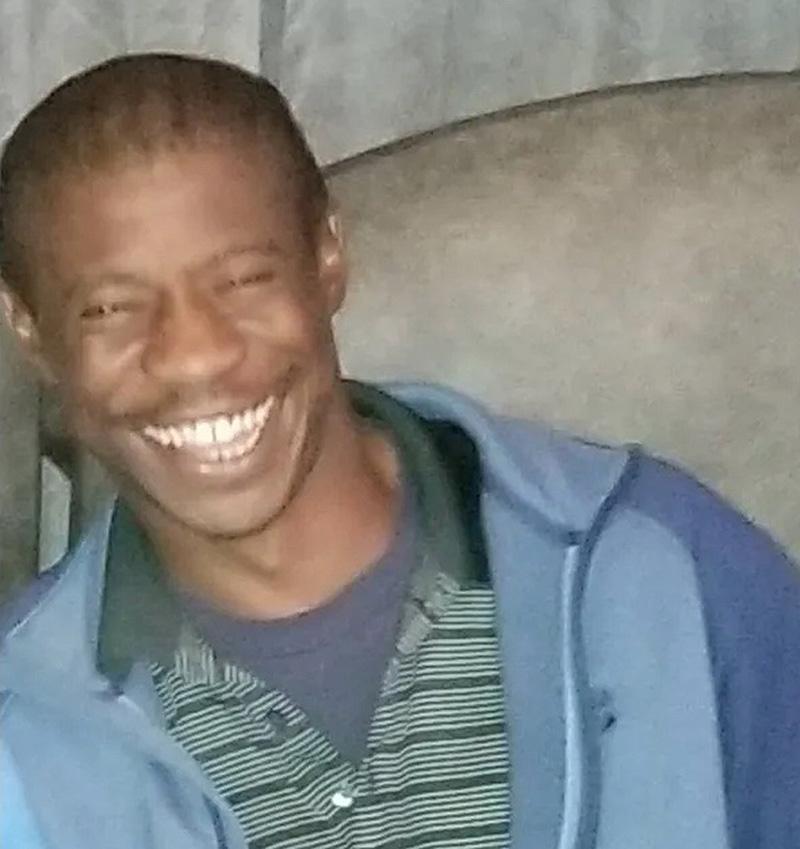
Harvey Hill Courtesy The Cochran Firm
The Reuters report describes the murder of Harvey Hill by three guards while in custody, May 6, 2018, in Canton, Mississippi. The cops who took him in the day before had been told, “He needs a mental evaluation.” Instead, Hill was charged with trespassing and jailed on suspicion of a misdemeanor offense that could bring a $500 fine. It became a death sentence.
The next day Hill's condition worsened, and he became violent—he was having a mental breakdown.
Three guards tackled the 36-year-old, pepper sprayed him and kicked him repeatedly in the head. After handcuffing him, two guards slammed Hill into a concrete wall, previously unpublished jail surveillance video shows. They led him to a shower, away from the cameras, and beat him again, still handcuffed...
Video showed Hill writhing in pain in the infirmary, where he was assessed by a licensed nurse but not given medication.... He was sent straight to an isolation cell, where a guard pinned him to the floor, removed his handcuffs, and left him lying on the cement. Hill crawled to the toilet. Then he stopped moving.
No one checked him for 46 minutes. When they did, he didn't have a pulse.
While the family sued, charging “wrongful death,” no charges were brought against the three guards. Only after the Reuters report became public did Mississippi state and federal politicians look into the case.
Use of Tasers by Guards to Torture

Martini Smith, in the Franklin County Jail in Columbus, Ohio, where she was tasered by guards which caused her to miscarry. Screen Grab of video.
The use of Tasers on prisoners by jail guards has led to scores of prisoner deaths, and amounts to torture. Martini Smith was 20 years old, pregnant, and stripped nearly naked in a Columbus, Ohio, jail. She'd been ordered to disrobe, take off all her jewelry, and put on a prison gown. But she just couldn't remove the silver stud from her tongue. She asked for help, but was told by a guard, "Take the tongue ring out.... I will Tase you."
After another warning, the guard fired the Taser's electrified darts into Smith's chest. She collapsed against the concrete wall and slid to the floor. Gasping, arms over her breasts. Five days later, Smith had a miscarriage.
“Don't Hurt My Baby”
Shade Swayzer arrived at the Milwaukee County Jail on July 6, 2016, charged with disorderly conduct and a parole violation. She was clearly pregnant, just weeks from her due date. She had been evaluated at a hospital before being put in jail.
Swayzer had been diagnosed with schizophrenia and bipolar disorder but ended up in an isolation cell without video coverage. Five days later, a guard who didn't know she was pregnant passed by several times before finally stopping at Swayzer's cell; seeing blood on the mattress, she called for help. Nurses found her on her side, umbilical cord attached to the newborn she was cradling in a blanket. Blood and feces were on the mattress. “Don't hurt my baby” she told them. The baby was dead.
Deadly Neglect—Depriving prisoners of medical care and treatment
Many guards in jails consider it part of their job to provide further punishment. This adds to the overcrowding and staff shortages that result in medical emergencies being ignored. But on top of that, more than 60 percent of the top jails now hire private companies to provide inmate medical care—not because they're better but because they're cheaper. And everywhere the “multi-billion-dollar correctional healthcare industry” has taken over jails, the results have been the same: more deaths.
Matthew Loflin, in jail in Savannah, Georgia, was coughing up blood, struggling to breathe and losing consciousness in his cell while awaiting trial on drug-possession charges. “I need to go to the hospital, I'm going to die here,” he told his mother on a jailhouse phone. He'd been held for seven weeks, enduring blackouts and racing heartbeats.
The jail's senior medical staff agreed he needed to go to the hospital. But the senior manager of Corizon Health Inc, their employer, said no. The medical staff finally got around their “boss” by sending the inmate to a specialist who had him hospitalized. But it was too late: Loflin was suffering irreversible brain damage and died two weeks later.
This was the second death in two months at the jail that the doctors had considered preventable. When they accused Corizon of putting profits over lives, they were fired.
One more inmate died from a treatable heart condition because the doctor's requests for hospitalization were denied. And another inmate died from a blood clot in his leg 32 hours after he crawled across the floor begging to go to the hospital.
After investigating Corizon's role at the jail over a two-year period, Reuters found “prescription drugs went missing, patients deemed gravely ill were denied hospitalization, mentally ill inmates went untreated and records were falsified... The jail's 400 mentally ill inmates, nearly a quarter of its population, were treated by a sole psychiatrist.”
****
Millions of people enter jails in the U.S. every year. They’ve been called a revolving door for those with mental health issues or substance-abuse disorders. Suicides are the leading cause of jail deaths, but fatal drug overdoses are the fastest growing cause of jail deaths.
In his 2022 book Death before Sentencing: Ending Rampant Suicide, Overdoses, Brutality, and Malpractice in America’s Jails, Andrew Klein writes:
... [J]ails are, in fact, de facto the largest drug detoxification centers in the country, the largest mental illness facilities in the country. And so these jails require a level of treatment that’s just totally missing. The result is a totally unacceptable death rate across the country in the nation's jails.
People in custody face a higher risk of drug overdose death. It is the third leading cause of deaths in custody in U.S. jails—and after release. Tolerance loss from withdrawal makes prisoners more likely to overdose when they take drugs again—before or after release. And without access to decent medical treatment inside prison or outside, death by treatable drug overdoses have skyrocketed.
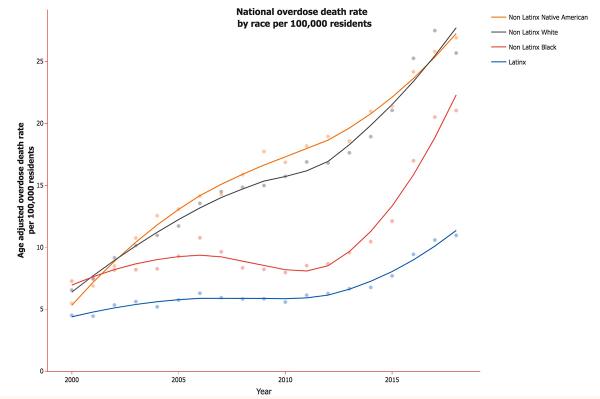
Because of this country's history of using the "war on drugs" to imprison huge numbers of Black people and other people of color, the use or even just possession of drugs is treated as a crime instead of a medical issue. Despite similar levels of drug use compared to white people, Black people and other people of color have been disproportionately criminalized for drug-related offenses, with devastating impacts on these communities. According to Vera.org, "Today, of the 2.3 million people incarcerated in America’s federal and state prisons, local jails, juvenile correctional facilities, and immigration detention facilities, one in five people are locked up for drug offenses."[Emphasis ours]
And people with mental illness are locked up instead of getting medical care as well, making suicide the leading cause of death.
Growing Numbers of Women Are Entering—and Dying in—Jail
According to Reuters:
The number of women held in America’s jails has risen more than 20 percent over the past decade, to an average of more than 115,000 inmates a day. And more and more are arriving in need of medical attention or with debilitating health conditions [that jails have made no preparation for].... Thousands arrive pregnant each year. Most suffer from mental illness—at far higher rates than their male counterparts—and they are more likely to experience drug and alcohol addiction. As more women are forced into America’s local jails, more are dying there, too.
The criminalization and over-incarceration of LGBTQ+ adults has been exposed by the Sentencing Project, which points out:
LGBTQ+ adults are incarcerated at three times the rate of the overall adult population, while LGBTQ+ youth’s representation among the incarcerated population is double their share of the general population.
LGBTQ+ people experience high rates of homelessness, poverty, unemployment, discrimination, and violence—factors that drive their overrepresentation in the criminal legal system. In both adult and youth facilities, imprisoned LGBTQ+ people face physical, sexual, and verbal harassment and abuse, including being denied recognition of their gender identity.
*****
Mass incarceration, overcrowding and rising deaths in U.S. jails comes not from some corresponding growth of crime, but from the criminalization of huge sections of Black and other peoples of color, women, and the LGBTQ+ community by this system of capitalism-imperialism. This should be intolerable to the decent people everywhere. And it must be ended the only way it can be—through an actual revolution.
Sources
Dying Inside: Hidden Crisis in America’s Jails, Reuters, 2020
Jail Is a Death Sentence for a Growing Number of Americans, the New York Times, November 22, 2022
Overdose Deaths and Jail Incarceration, National Trends and Racial Disparities, Vera.org
Incarcerated LGBTQ+ Adults and Youth, Sentencing Project
Remaking America: What’s Being Done About the Rise in Jail Deaths? NPR, September 8, 2022
Emerging Movement for Police and Prison Abolition, The New Yorker, May 7, 2021
Remaking America: Why suicide is the leading cause of death in jails and what we can do about it, NPR