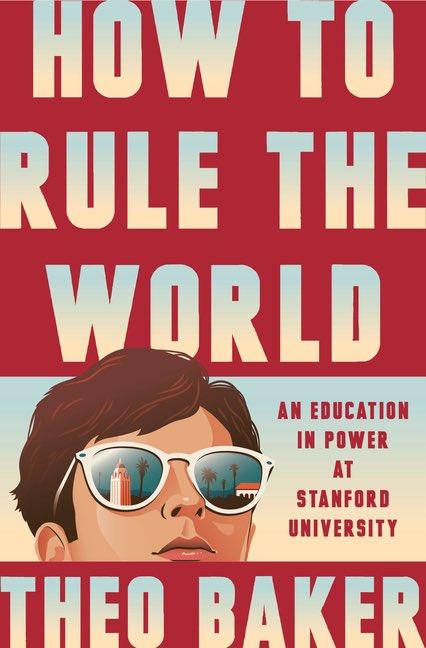
In the book “How to Rule the World: An Education in Power at Stanford University,” Theo Baker tells the intense story of his freshman year at Stanford. He calls out the impact of high-tech capital and how it is changing the moral, intellectual, and cultural life of the university. Baker vividly portrays Stanford’s integration into the high-tech capitalist behemoth, Silicon Valley, and how this has shaped a stultifying and terrible culture of avariciousness (greed), extreme individualism and cutthroat competition among the students, and on the campus in general. Stanford is the extreme example, but parallel ugly changes are going on at other campuses—including nearby UC Berkeley.
Stanford is located right inside Silicon Valley, and Stanford’s computer science department is well-known for producing students who become high-tech billionaires. Since roughly the start of the twenty first century, over 70 new buildings funded by high-tech capitalists have been built at Stanford—the names on the new buildings include Zuckerberg, Hewlett, Packard, Gates, Yang, etc. John Hennessy, who was president of Stanford when most of these buildings were built, has been called “the godfather of Silicon Valley.”
This is hardly the first time that universities in the U.S. have been dominated, ruled and penetrated by big capital or reactionary ruling classes. In a fundamental sense, universities have to fundamentally serve the ruling class of the system they are part of (as do all major institutions, culture, etc.). Over the decades since World War II, the U.S. touted its university system—with purported freedom of scientific and scholarly inquiry—as an important part of the superiority of its “democratic” system, even as this was tattered and threadbare. This “freedom” was always freedom within a certain framework, and when more fundamental interests of the system demanded, it has had to go. This was true in the McCarthy era when professors were fired for their beliefs, and now, with Trump, when science, truth, and everything the universities are supposed to be about is under attack.
Baker’s book reveals how extreme the capitalist penetration of Stanford is getting today, how far things are from even previous liberal capitalist ideals of what a university should be, and how much this has shaped the life of students on the campus. Baker paints a picture of the scene at Stanford: venture capitalists and their recruiters hang out in campus cafés and “pluck” who they see as the most promising new computer science students, luring them with supposedly secret knowledge of how Silicon Valley works, with parties on yachts, expensive liquor, piles of money—and with the promise of an inside track to getting a billion dollar start up.
Baker points to one (former) student reaching the peak of the frenzied high-tech gold rush:
When the talented artificial intelligence researcher Ilya Sutskever1 started Safe Superintelligence, he launched with nine employees, a two-hundred-word placeholder statement, and zero articulation of a product, much less any revenue. The company was valued at $32 billion. Higher than the national bank of Canada, the cosmetics giant Estee Lauder, and even the third-largest auto manufacturer in the world, Hyundai, which produces more than four million cars a year. SSI, meanwhile, has produced nothing.
They Think They Are Going to Be “Masters of the Universe”—but They Are in Training to be “Capital Personified”

Children labor in the Congo cobalt mines, July 29, 2014. Photo: PD
The name of Baker’s book comes from a CEO venture capitalist known as Justin who recruits a very select number of students for an uncredited and not publicly announced “class,” named “How to Rule the World.” The members of the class call themselves “Rulers.” This is just one of a number of such groups at Stanford.
Baker writes of the training in ruthless capitalist social relations involved in the “Rulers”: “‘The overriding theme of the class is to exceed the limits of your conceivable ambition,’ a Ruler named Billy told me. Justin would bring in a different topic each time, always coming back to the same core point: ‘For a select group of people—those with increased agency—a great amount of value can be extracted from the people around you.’” (p. 132)
Another student told Baker that “Justin taught her tactics—how to humor people, when to be self-deprecating, and so on. ‘There are things people do in conversation,’ Janet learned, ‘that seem super harmless and almost accidental, but they’re not. They’re actually pretty intentional, for getting somewhere, for framing a conversation a certain way, for getting them to make you feel really close to them.’ Justin had ‘thought through all those things—honestly kind of like a sociopath.’” (p. 133)
There is a kind of vicious irony involved in all of this. These students are buying into a whole mentality of use or be used, fuck or be fucked, “like a sociopath,” and they expect this will lead them to be masters of the universe. But the reality is what Marx captured in a few sentences: "As capitalist, he is only capital personified. His soul is the soul of capital."
They are being trained to think that their genius will determine reality. But in a fundamental sense they are nothing but instruments of a larger process which rests at bottom NOT on individual genius, but on global networks of exploitation. In fact, it is the collective wage slavery of thousands and millions over the globe that produces the billions that these students are chasing. It is the suffering of child laborers in cobalt and coltan mines2 in the Congo and neighboring countries which are a key foundation of the high-tech colossus.
Lenin wrote about how capital compels people to act with the “stinginess of a miser.” This is the training that is going on in these classes, training to act with the stinginess of a miser in relation to society and other people—and even at times to themselves. And then there is the basic fact that, as John Hennessy told Baker, hundreds of computer science students at Stanford think they will become billionaires, but probably only one will.
Theo Baker writes about this from the perspective of someone who started to enter into this world, and to his credit decided it was not for him. Baker shows how the spirit and ethos of the “Rulers” extended beyond just the secret groups of elite computer science students. In one class, there was a week focused on ethics, and students were asked to raise their hands “if you care about ethics and stuff like this.” Baker writes, “I put mine up and looked around. Not a single other arm was in the air. People didn’t even care enough to pretend ethics mattered to them.” Baker notes: “As recently as 2008 the history department graduated more seniors than the computer science department. Now there are sixteen times as many graduates in CS (Computer Science) as in history—341 to just 21 in 2025.”
“We’ve lost the sense of shame and the sense of purpose”
Baker writes about Steve Blank, a long time Stanford professor of computer science who leads a group called Lean LaunchPad, which is a public, famous group that works with students and high-tech capitalists and trains the students to develop startups. Blank comments on how there has been somewhat of an ethical change in recent years at Stanford. Blank’s orientation more proceeds from an earlier Silicon Valley ethos that advances in technology should serve society in some way. Blank told Baker: “‘We’ve lost the moral compass for what we invest into,’ he told me. ‘we’ve lost the sense of shame and the sense of purpose.’”
Steve Blank makes the observation that there is a viciousness and brutal amorality increasingly nakedly dominating a place like Stanford, Silicon Valley (and American society). This is true and important. But this ugliness is an extension of what has come before.
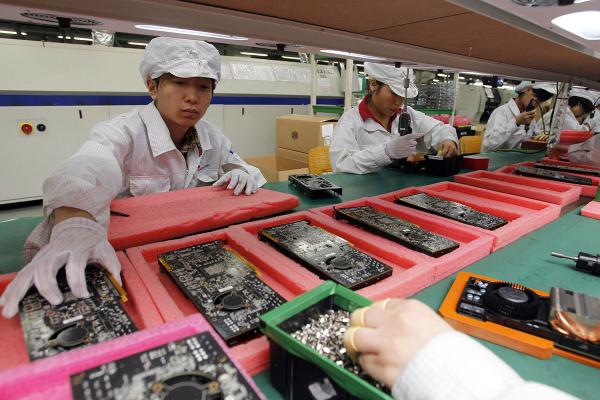
You have to ask the question here, when was Silicon Valley such a wonderland? Was that the case when in 2014 Apple Computer was making billions off of the labor of workers in China, especially women, who slaved and lived under conditions so terrible that many workers committed suicide by jumping off the workers’ dormitory roof? Apple responded not by changing conditions but by putting up nets to block or catch the suicide attempts. Or decades before that when Silicon Valley companies were deeply involved in producing tools for imperialist war, repression and mass surveillance (as many continue to do right now)?
UC Berkeley: Chasing the Gold Rush, Changing the Culture

Mario Savio, Sproul Hall Sit-in Address October 1, 1964 at the University of California, Berkeley. Photo: Chronicle/Duke Downey
Courtesy of The Bob Avakian Institute.
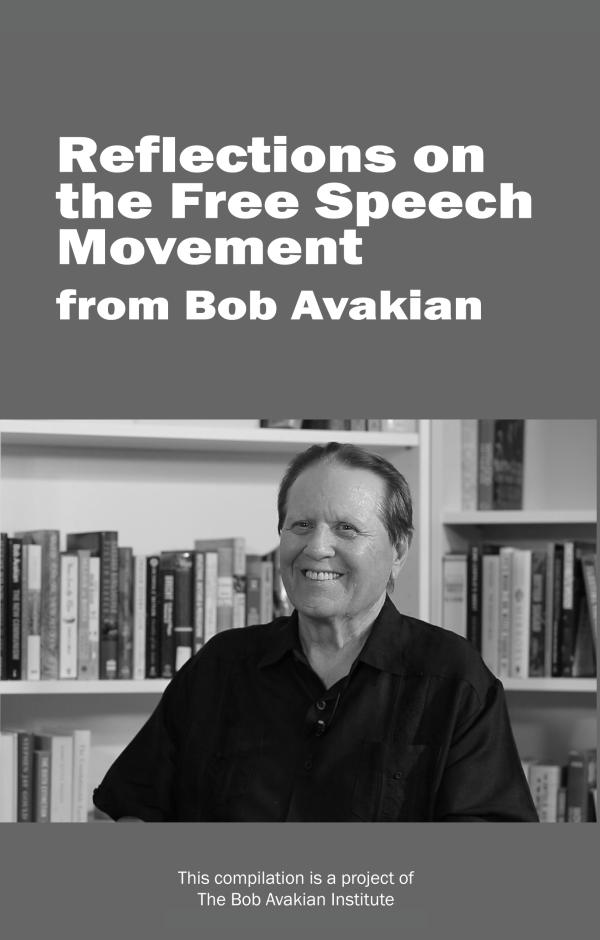
While Stanford is in many ways the extreme case of the current gold rush lunacy in the universities, this is going on at other major universities as well. A very important case in point is UC Berkeley. Berkeley is very different in some ways than Stanford—much larger, a public university, and well, “Berkeley”—historic home of the Free Speech Movement and powerful struggles against war, for ethnic studies, against apartheid in South Africa, etc. It is still the case that students come to UC Berkeley looking for something rebellious and outside the norm, looking for the legacy of Mario Savio, the leader of the Free Speech Movement in the early 1960s.3
But high level administrators and those with real power at UC Berkeley had a different idea. They looked at the insane high-tech gold rush that was going on at Stanford… and set out energetically to make that happen at Berkeley. The current Chancellor of UC Berkeley, Richard Lyons, was a key player. In a 6 year old interview Lyons who was then UC Berkeley’s first chief “innovation and entrepreneurship officer“ pointed out what he considered a problem. He complained that many students do “not see themselves as entrepreneurs, as founders, as venture capitalists and so forth.”
So to address this “problem,” and to tackle the closely related “problem” that many students come to Cal because of its legacy of movements for free speech, anti-war, and “third world liberation,” Lyon and others founded new programs on entrepreneurship, consciously trying to steer reluctant students in the direction of becoming capitalist pigs. No more of this “down with corporate greed” atmosphere. It was time for “greed is good.”
A whole series of things were done at Cal to change the framework, to set up institutions which would foster “entrepreneurialism,” enable business start ups, link up venture capitalists with students. At one point, if a professor who had a lab at UC Berkeley used that lab to do work for his own private company, this was considered an ethical problem, and made getting tenure harder. The rules were changed, not just at UC Berkeley but throughout the entire University of California system (including UCLA, UC San Diego, UC San Francisco, etc.) and now it is considered a good thing for professors to use UC labs and resources for their own enrichment, and doing this is now considered a big positive in getting tenure and promotions.4
You now see opinion pieces in the student newspaper lamenting the fact that so many student organizations have been formed to promote crypto, business consulting, and artificial intelligence, and that they are now dominating campus life. And, paralleling the secret “classes” to train would-be entrepreneurs at Stanford, some of these student clubs at Cal are harder to get into and require a more rigorous application process than getting hired at a Fortune 500 company.
Universities Serving a Grotesque Capitalist Parasitism
The wretched atmosphere on these campuses shows something important about American capitalism-imperialism today. This is a system where enormous profits are made by capitalists inside the U.S. from production which largely takes place outside of the U.S. under extreme conditions of exploitation. What is concentrated in the U.S. is not manufacturing, but the “high end” of administration and development of cutting edge technology along with what are called the FIRE sectors—finance, insurance, real estate.5 The universities are being shaped to serve this grotesque capitalist parasitism.
This transformation to a more nakedly ruthless, extremely individualistic, dog-eat-dog environment and ethos is bad enough in itself, but it has also been part of the basis for the universities to cave into and/or support Trump MAGA fascism.
High-tech Nightmare? Or An Emancipated Humanity?
While the internet was initially developed by the U.S. military, the Silicon Valley culture grew in part from people who had a kind of idealism that the technology itself, without changing the underlying system, could free people from the barriers that set people apart and against each other on the planet, and could link together humanity. That was never going to happen, because it is not possible for any corporation to escape the competitive exploitative functioning of capitalism-imperialism. Today this system has brought us to the place where the high-tech titans are increasingly lining up with Trump and more thoroughly turning the technology over to fascist mass surveillance and imperialist war.
Far too many look at that and see nothing in the future but a high-tech nightmare—or worse. But wielding the scientific method of the new communism, and penetrating beneath the surface to the real driving forces of this system, a different possible future comes into view. A future world where the immensely powerful technology of today no longer serves to enslave humanity—because the reality is that it is the social SYSTEM that controls and dictates how humanity will live, and that social system can be overthrown and surpassed.
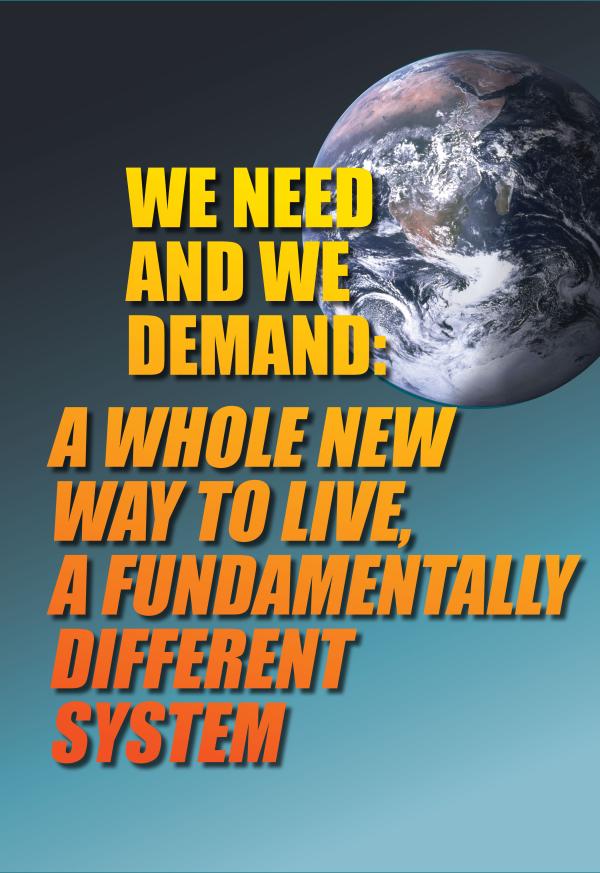


A different world really IS possible. A future socialist society on the road to communism, in which instead of new technology being feared because it will throw masses of people out of work and leave them without a means to live, technological advances (along with other revolutionary transformations to end oppressive relations) could be part of people actually being freed of the need to do burdensome work! A future world where the foundation of the economic and social system no longer compels people to treat each other like sociopaths, but instead makes it possible for people to move beyond oppressive social relations and treat each other like human beings. A future world where university culture in a place like the U.S. is no longer a concentration of parasitic exploitation—because the USA will no longer exist and in the new socialist society that has replaced it, as “We Need And We Demand”6 puts it:
The purpose of the educational system in this new socialist society will be to enable people to pursue the truth wherever it leads, with a spirit of critical thinking and scientific curiosity, and in this way to continually learn about the world and be better able to contribute to changing it in accordance with the fundamental interests of humanity.
Bob Avakian, the revolutionary leader and architect of the new communism, speaks to this future society many times and in many ways, but here is one crystallization:
A whole different way of living is possible: a whole different way to organize society, with a radically different economic foundation and political system, emancipating relations among people and an uplifting culture—all of this oriented to meeting the basic needs and fulfilling the highest interests of the masses of people. This is set forth, in both a sweeping and concrete way, in the Constitution for the New Socialist Republic in North America, which I have written. Summaries of basic points in this Constitution—shining a light on the truly emancipating way we could be living—are laid out in the Declaration WE NEED AND WE DEMAND: A WHOLE NEW WAY TO LIVE, A FUNDAMENTALLY DIFFERENT SYSTEM. (This Declaration, as well as the Constitution for the New Socialist Republic in North America, is available at revcom.us.)
This is not some fantasy. Capitalism-imperialism, for all its horrors, has laid a basis for a radically different socialist society that itself is a transition to a fully emancipated world, a communist world. This world CAN be brought into being, and this is a rare time when the potential exists for revolution in the U.S.—which would be an enormous historic advance for humanity. (Humanity on the Brink)
We can do immensely better than the dog-eat-dog world Theo Baker exposes. Everyone who is disgusted and repelled by what exists today should dig into the method and work of Bob Avakian, and take up the fight for a different world. The challenge and the choice were captured in BA’s memoir:
If you have had a chance to see the world as it really is, there are profoundly different roads you can take with your life. You can just get into the dog-eat-dog, and most likely get swallowed up by that while trying to get ahead in it. You can put your snout into the trough and try to scarf up as much as you can, while scrambling desperately to get more than others. Or you can try to do something that would change the whole direction of society and the whole way the world is. When you put those things alongside each other, which one has any meaning, which one really contributes to anything worthwhile? Your life is going to be about something—or it’s going to be about nothing. And there is nothing greater your life can be about than contributing whatever you can to the revolutionary transformation of society and the world, to put an end to all systems and relations of oppression and exploitation and all the unnecessary suffering and destruction that goes along with them. I have learned that more and more deeply through all the twists and turns and even the great setbacks, as well as the great achievements, of the communist revolution so far, in what are really still its early stages historically.