Netanyahu says there's still "work to be done" before Iran war ends | 60 Minutes
All week long, the Trump administration has promoted expectations—or at least hopes—of a possible truce with Iran. Now as we go to press, Trump posted on social media that the Iranian proposal was “unacceptable.” Simultaneously Israeli prime minister Benjamin “Netan-Nazi” Netanyahu was on 60 Minutes proclaiming that the war was not over and went on to list a series of aims that he saw as essential.
Whether this signals new escalation or whether Trump will again reverse course tomorrow is not certain. The lives of hundreds of millions in the region, and billions more beyond, rest on the whims of the fascist monster leading the U.S. and how he perceives “America’s interests.”
Bob Avakian’s essential point stands out all the more: "We, the people of the world, can no longer afford to allow these imperialists to continue to dominate the world and determine the destiny of humanity. They need to be overthrown as quickly as possible. And it is a scientific fact that we do not have to live this way."
Why Is the Trump Regime Even Negotiating?
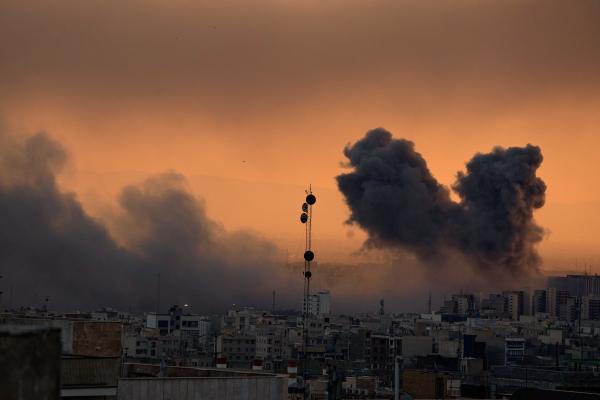
On February 28, the U.S. and Israel launched their war of aggression against Iran. They expected a quick, overwhelming victory. But Iran’s regime did not collapse or capitulate as Trump and Netanyahu expected. Instead, it countered the U.S. in ways that created or intensified other problems for the U.S. and the Trump regime.
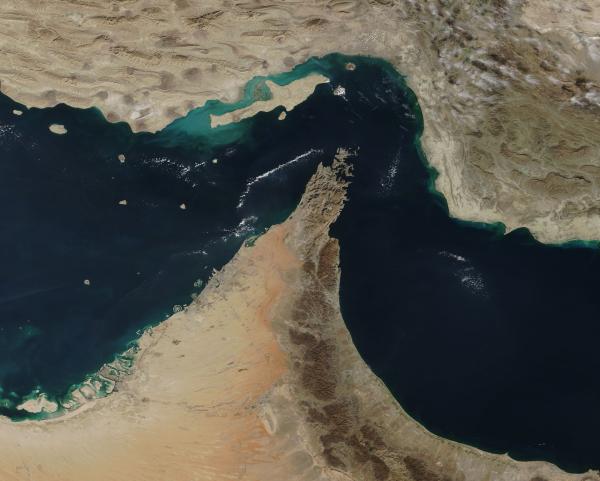
The Strait of Hormuz, December 6, 2018. NASA
The Iranian regime shut down the Strait of Hormuz through which 20 percent of the world's oil flows and began to seriously damage the world (and U.S.) economy. The U.S. could not see a way to stop the shutdown without risking military losses that the Trump regime was not prepared to accept. What ensued was a stalemate, or a standoff, in which the U.S. could not see a way to win but also could not afford to walk away from in defeat, lest other powers detect weakness.
So the Trump regime began trying to achieve its key aims and win “victory” through negotiations—while continuing to threaten massive destruction should negotiations fail. Even with Trump’s latest post, it is still not impossible that the regime could decide to “cut its losses,” and come to some kind of agreement with Iran (even a partial or temporary one), and declare victory… for now.
At the same time, Trump’s rejection, along with Netanyahu’s message on 60 Minutes, also illustrates that this is by no means assured and in fact there is the very real danger of further, even more deadly escalation.
Trump Again Threatens Nuclear War:
“One Big Glow Coming Out of Iran”
Even before Trump’s current rejection of the Iranian offer, the U.S. has continued to bully, threaten and pressure Iran to agree to the U.S. deal. The U.S. has continued to attack Iranian ships. It’s imposing new sanctions on Iran, and Trump continues to spew his genocidal threats, demanding Iran better sign a deal “fast,” and if not, “the bombing starts, and it will be, sadly, at a much higher level and intensity than it was before,” he wrote on Truth Social.1 On May 7, Trump went even further, saying that if there wasn’t a ceasefire, there’d be “one big glow coming out of Iran.” This isn’t some rhetorical flourish—it’s an open threat to use nuclear weapons if Iran doesn’t agree to U.S. demands—and the danger is very real.2
Behind the scenes, the U.S. and Israel are already coordinating plans for new strikes on Iran, according to a May 5 report in the Israeli newspaper Haaretz. These include “targeted assassinations of senior Iranian officials and attacks on the country's energy infrastructure.” There are also reports that the U.S. is continuing to send other military units and hypersonic missiles to the region.3
Iran Makes Counter-Moves
Yet Iran also has moves to make. The week began with Trump announcing a new escalation on May 4: “Project Freedom” to guide ships through the Strait of Hormuz and break Iran’s control of these strategic waterways.4 To carry this out, the U.S. deployed guided-missile destroyers, over 100 aircraft and 15,000 troops.
The very next day, Trump called it off. Why? Iran didn’t back down but used its asymmetric arsenal of fast boats, cheap drones, and other missiles to fire on a number of vessels and directly clash with the U.S. Navy. Iran may not have tactically “defeated” the U.S. in these encounters, but strategically it showed shippers and the Gulf States that they would pay an enormous cost if they attempted to transit the Strait of Hormuz, and an even greater cost if U.S. aggression compelled Iran to directly attack them. (Iran’s drones and missiles hit at least 18 U.S. military sites in seven different countries, mainly in the Gulf, damaging some 228 structures.5)
This looming threat—and anger over the ongoing war and blockade of the Strait—prompted longtime U.S. allies Saudi Arabia and Kuwait to take the highly unusual step of denying use of their airspace and bases for the U.S. to use in this new operation, which they needed to protect the ships they were guiding. It was reported that Saudi Prince Mohammed’s action "stunned" U.S. officials and forced Trump to abandon his plan.
No one can predict what will happen next, but if Trump and those around him interpret this as evidence of a loosening U.S. sway over regimes they have previously relied upon, they may decide they have no choice but to resume the war on an even more vicious, violent and openly genocidal scale.
This is the insanity of a world ruled by imperialists and locked into the confines of an imperialist system.