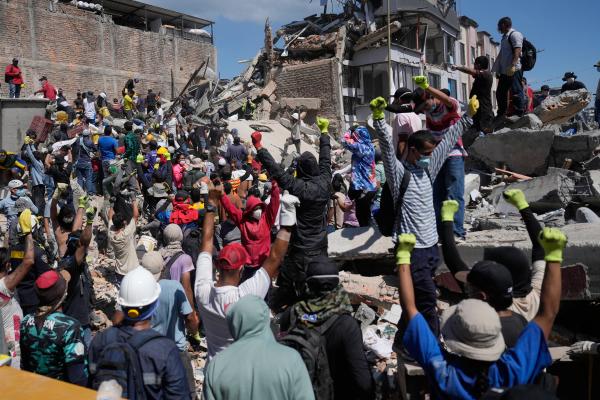
On August 10th, Colombia experienced its strongest earthquake in nearly half a century, causing, at the time of this writing, at least 265 deaths, nearly 3,500 injuries, and several hundred missing persons. The epicenter was in San José del Palmar, a small municipality of just 5,000 inhabitants in the department of Chocó, where more than 500 buildings were affected, at least 20 of which were completely destroyed. At least four departments in western Colombia suffered the most from this 7.4 magnitude earthquake.
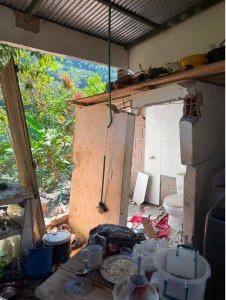
House affected in the rural area of the epicenter, San José del Palmar, Chocó. https://comrev.co/
In Chocó, the poorest department in the country, not only the capital, Quibdó, but also numerous towns along the Atrato River have suffered severe damage. Many remain cut off and have not received any government assistance. Pereira, Manizales, and Cali, the main cities near the epicenter, with a combined population of approximately three and a half million people, have dozens of collapsed buildings, and hundreds of rescuers and volunteers are making immense efforts to rescue those trapped under the rubble. The national death toll, number of injured, and missing persons varies with each update and differs among various sources due to the lack of updated and centralized official figures.
Why did this earthquake happen?
What are tectonic plates?
Beneath our feet lie enormous solid blocks called tectonic plates, which make up the Earth's thinnest and outermost layer, the lithosphere. There are seven major tectonic plates: the Pacific, North American, South American, Eurasian, African, Indo-Australian, and Antarctic plates. More than a dozen minor plates are also known, such as the Nazca, Caribbean, Cocos, and Arabian plates, among others. The tectonic plates float on the uppermost layer of the Earth's mantle, called the asthenosphere. The asthenosphere is also composed of solid rock, which, due to high pressures and temperatures, behaves plastically and malleably. This allows the tectonic plates to sometimes converge, sometimes diverge, and sometimes slide past each other, slowly and constantly changing the surface of our planet. When these plates converge, it is called a convergent boundary: this occurs when two plates collide. If both plates have similar densities, they collide and deform, but do not generate volcanoes. However, if one plate is denser, the denser plate slides beneath the less dense one; this process is known as subduction. In this process, frictional stresses accumulate in the contact zone between the two plates, where a large amount of energy is constantly stored. This energy is released at certain times, causing earthquakes. Earthquakes, volcanoes, and mountain ranges are generated at convergent boundaries. The sliding of the Nazca Plate beneath the South American Plate gave rise to the Andes Mountains. If the plates are moving apart, it is known as a tectonic boundary; it is divergent, and because of this, cracks form through which magma emerges. This is how new ocean floor and underwater mountain ranges are created. Africa separated from America at a divergent boundary. If the plates slide past each other laterally in opposite directions, it is known as a transform fault. These movements release a lot of tension that is also released in the form of earthquakes.
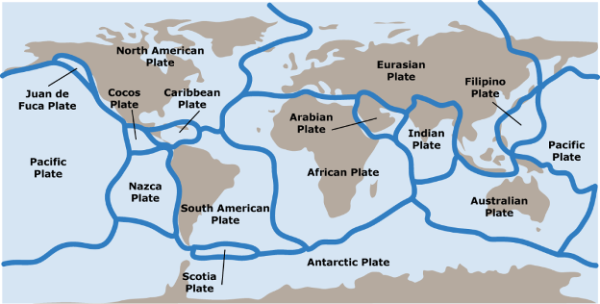
Major and minor tectonic plates that make up Earth's lithosphere. Click to enlarge. Source: Swiss Seismological Service
The importance of applying a scientific method and approach
There are many popular beliefs about the causes of earthquakes and how to predict them. Often, certain animals, such as birds, fish, chickens or dogs, are attributed with the ability to "predict" earthquakes. It has also been believed that earthquakes are more likely during periods of intense heat. This should not be uncritically accepted as "folk wisdom." These beliefs should not be accepted simply because they come from people or because they are ideas that "have always been believed." They need to be tested against reality, and only if sufficient evidence exists could they be accepted. Although “it’s very hot” isn’t a direct cause of earthquakes, as geologist Adriana Ocampo explains, cutting-edge research from the University of Tsukuba and the National Institute of Advanced Industrial Science and Technology in Japan has demonstrated, using mathematical models, that solar activity causally influences seismicity. The sun’s heat, while causing only a slight increase of 0.1 to 0.2 degrees Celsius in surface temperature, can make rocks more brittle and alter pressure in faults by modifying the movement of groundwater. A good example of the treatment of “popular beliefs” or “folk wisdom,” though not in the field of seismology, occurred in China during the period of socialist construction led by Mao Zedong. Mao directed several scientists, including Tu Youyou, to investigate “remedies” traditionally believed in China to treat various fevers and subject them to scientific evaluation . Of hundreds of “remedies,” Tu Youyou found evidence that artemisinin did indeed have verifiable effects in treating malaria. Tu Youyou received the Nobel Prize in 2015 for this discovery. This was not an “anomaly” or an isolated incident, as is often claimed, but rather the product of a broader orientation in socialist China. While China experienced problems with epistemological populism (learn more about this in Bob Avakian’s article, “Communist Scientific Theory and the Problem with the ‘Mass Line’” ), it waged significant battles against superstition, as seen in the campaign launched during the socialist education movement in 1965. This campaign included organizing local exhibitions with the slogan “Base your education on science, get rid of superstition.” Science has not yet achieved the ability to predict an earthquake in the sense of knowing the exact date and time it will occur, and this remains one of the most significant scientific challenges. However, the understanding that the Earth is not an isolated system and the integration of disciplines that previously seemed unrelated are a source of optimism among scientists. A few decades ago, it was impossible to predict tornadoes and hurricanes, but today they can be predicted relatively quickly, as can the likelihood of a tsunami following an earthquake. The current goal of seismologists is not to "predict" an earthquake, but rather to detect precursor signals and issue faster and more reliable warnings. And although there is still no reliable method for predicting the exact day of an earthquake, there is promising research on changes in microseismic activity, variations in soil electrical conductivity, electromagnetic emissions, and slow deformations.
Faced with catastrophic events like these, many people wonder about the reason for this phenomenon, and in an environment plagued by misinformation, superstition and anti-science, unfounded explanations, whether supernatural or conspiracy theories, are very common.
This is a tectonic event, without any human or "divine" influence. It is also independent of the time of year or temperature. It is part of the normal behavior of tectonic plates (see sidebar) in this region, especially in the western part of the country.
Neither earthquakes nor aftershocks can yet be predicted. There are ongoing efforts to develop science and technology in this area, especially regarding aftershocks (the Omori-Utsu Law, which calculates how the frequency of earthquakes decays over time, and Båth's Law, which estimates the maximum magnitude of the aftershock in relation to the main earthquake).
Predicting an earthquake would require knowing three variables: where it will occur, its magnitude, and the time it will happen. This last variable cannot yet be known with significant advance notice (although it is not entirely impossible, at this time it is not sufficient to issue early warnings). What is possible, however, is to determine the areas of greatest seismic risk.
Colombia is a country with a highly complex geology. The Nazca, Caribbean, and South American tectonic plates converge in this territory, and their interaction can produce sudden releases of energy known as earthquakes. Colombia is located in the Pacific Ring of Fire, which concentrates 90% of the world's seismic and volcanic activity. And in the Eastern Cordillera lies the Bucaramanga seismic nest, the most active in the world at intermediate depth. The seismological network records approximately 80 earthquakes daily, but most are imperceptible to the general population, although they can be detected by geological instruments.
The Pacific coast region, in western Colombia, is one of the most seismically active areas in the country due to the collision between the Nazca and South American tectonic plates. In geology, this is known as a subduction process. Subduction processes are the primary source of earthquakes worldwide. One plate slides beneath the other, generating friction and an accumulation of energy that builds up year after year until it reaches a point where it is released, causing an earthquake. This can occur at great depths. The August 10th earthquake had a depth of approximately 103 kilometers [64 miles], but because it had a magnitude of 7.4, even at that depth it did not completely dissipate on its journey to the surface.
Although most earthquakes are caused by the collision of tectonic plates, there is also seismicity that stems from volcanic activity, mainly located in the Central mountain range. However, as the Colombian Geological Service and seismology experts have clarified, this earthquake is not directly related to the recent ash emissions from the Puracé volcano, as these are two different geological processes.
Human activity can also cause earthquakes, and after this earthquake, some people have pointed to fracking or oil extraction as the cause. While fracking and hydrocarbon production are indeed polluting and harmful to the environment, it is not true that they caused this earthquake. Although mining, oil extraction, the use of certain military and nuclear weapons, and dam construction can cause earthquakes, the percentage of earthquakes of anthropogenic origin is very small and they are generally of low magnitude. And regarding the August 10th earthquake, there is abundant evidence and scientific consensus that its origin lies in the subduction of tectonic plates.
A disaster resulting from a natural event under a disastrous system
Just as some soils either attenuate or amplify seismic waves and mitigate or worsen the effects of an earthquake, the economic base—the type of system upon which society is built—can have a mitigating or aggravating effect on the effects of these natural phenomena. The type of system under which we currently live, the capitalist-imperialist system, unnecessarily multiplies the effects of these natural phenomena on the population, even though the knowledge and resources exist that could significantly reduce the population's vulnerability to these events.
As already mentioned, it is not yet possible to accurately predict, much less prevent, earthquakes. But science exists to prepare for them in various ways in order to dramatically reduce immediate destruction and subsequent suffering. Colombia is located in the region with the highest seismic and volcanic activity in the world, and for scientists and experts, these types of earthquakes are not at all a surprise; they are normal and expected phenomena. Nine out of ten people living in urban areas of Colombia reside in zones of greatest seismic risk, so preparing for these types of events should be a top priority.
The attention this system gives to these tragedies versus the attention that is possible to give
The first 72 hours after an earthquake are crucial for rescuing trapped people, but the government of De la Espriella, who took office on Friday, refused international assistance for the first 48 hours. It wasn't until the third day (just hours before this article was published) that the government appointed a new Director of Risk Management, amid distrust of the measures implemented by the previous director (a member of the Petro faction) to coordinate international aid.
The Colombian government explicitly rejected aid from countries not aligned with the far right. Countries like Mexico and China have offered assistance, including teams of medical personnel and specialized search and rescue operators, which are crucial in catastrophic events like these, especially considering that there are still areas of the country, such as Chocó and rural areas of Quindío, Caldas, Risaralda and Valle del Cauca, that have suffered severe damage, many of which are isolated and have not received any government aid.
In downtown Pereira, near La Libertad Park, a busy bakery and a hotel for the homeless, recyclers and street vendors collapsed. It is very likely that dozens of people are trapped under the rubble, but more than 50 hours after the earthquake, no specialized rescue team has arrived. The only state presence has been a group of police officers stationed there to “prevent disturbances or looting.” At the time of this writing, the government of Abelardo de la Espriella (ADLE) had only authorized receiving aid from teams from Israel, the United States, El Salvador and Ecuador, stating that these are the ones that “comply with international protocols.”
Teams from countries like Mexico have not been authorized to assist in rescue efforts, despite having highly trained and certified teams under the UN's INSARAG protocol. Everything indicates that certification appears to be merely a pretext, and that the ADLE government is applying a policy of only accepting aid from "friendly" countries aligned with its fascist policies. If this is the case, it jeopardizes the lives of hundreds of people trapped under the rubble, reveals the murderous and criminal nature of this regime, and demonstrates that empathy—that invaluable capacity to understand and identify with the feelings of others—cannot be separated from or opposed to fundamental social relationships.
Some preliminary estimates put the damage at around 20 trillion pesos. The United States Geological Survey (USGS), the agency that monitors earthquakes worldwide, estimates that the damage could reach up to 7% of GDP, or 130 trillion pesos.The profits of the banks in 2025 alone amounted to 27.7 trillion pesos. Why, instead of holding public fundraisers, don't these banks simply say, "You know what? We're going to dedicate all our profits, a good portion of our assets, and all future profits until the tragedy is fully addressed"? Why not? Because of the inherent dynamics of this damned system. Given the anarchic nature of production under which this system operates, there is fierce competition among capitalists, forcing them to prioritize profits under the logic of expand or be devoured by other capitalists. In a system like this, the interests of the vast majority are not prioritized; instead, the interests of capital take precedence. And even in an emergency situation like this, the dynamics of this system continue to operate.
It is possible to have reserves of emergency supplies, rescue equipment, and other highly trained personnel available in advance to respond to these types of events. It is equally possible and necessary to train the population in the scientific understanding of these phenomena, as well as in the best methods of disaster prevention, emergency protocols, and search and rescue techniques. In these types of events, the support of expert personnel from other countries, who can be deployed quickly to the most affected areas, can be invaluable in the effort to save as many lives as possible. However, in a system that views people as a problem rather than part of the solution, even with supplies, equipment, protocols and training, the results will be disastrous.
Countless people have shown solidarity with those most affected by the earthquake. In every area with collapsed buildings, hundreds have come to help remove rubble and try to save as many lives as possible. Many people from different parts of the country are collecting aid and food and making monetary donations to help those affected by the earthquake. And cynically, large corporations and banks, which have made billions in profits in recent years, are running campaigns inviting people to donate money to address the tragedy. (Read "Fascist Cruelty and Attack on Empathy vs. the New Communist View of Empathy," by Bob Avakian)
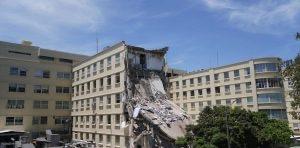
University Hospital of Valle, Cali, Valle del Cauca. https://comrev.co/
Formal regulations and actual construction under this system
In areas of high seismic activity like this one, strict measures must be taken to mitigate the effects of these natural events: Buildings must be constructed in a way that prevents their collapse, even in strong earthquakes. Today, engineering advances allow buildings to be not only earthquake-resistant (withstanding the earthquake without collapsing, although they may deform or crack in the process) but also earthquake-resistant (minimizing the effect of the earthquake thanks to seismic isolators that reduce the transmission of ground motion to the structure, or energy dissipators that absorb some of the seismic energy within the building).
Colombia has a Seismic-Resistant Construction Code (NSR-10), but, as several experts have warned, this code has not been substantially updated in the last 16 years and does not take into account the technical and international advances made since then. Although there are concrete proposals for its reform, these have not been implemented, despite the high seismic risk in Colombia.
Beyond this, the reality is that although this Code exists, in most of the country, buildings are not constructed in compliance with it. On the one hand, fat cats and medium-sized construction companies simply "buy" approval for their designs and construction without adhering to the regulations; and on the other hand, most buildings in the country, especially in rural areas and on the outskirts of cities, are the result of self-construction, which generally does not meet minimum construction safety requirements.
According to the National Professional Council of Architecture, in 2023 at least 52 percent of buildings constructed in Colombia were built before the NSR-10 Construction Code was in effect, and three out of every five housing units entering the market are of informal origin, meaning they were built without a permit and without any guarantee of meeting current seismic resistance requirements. Many buildings in Colombia have thin concrete walls, typically between 7 and 10 centimeters [2.8 to 4 inches] thick, and only a single layer of steel reinforcement—usually welded wire mesh—which is very fragile and breaks easily.
Why does this happen? Because construction, and the other economic sectors under this system, are “markets” governed by capitalist logic. Housing is a commodity, to which the vast majority of people do not have access. In Colombia, only 4 out of 10 households own their own home, and the vast majority of the general population, faced with the high cost of real estate and construction materials, resorts to informal construction or self-building to reduce costs.
It is not “inevitable” that housing be considered a commodity, and that people are forced to live in unsafe housing due to lack of money. It is possible to build a social system where the purpose of production is not profit and not everything is a commodity, but this requires overthrowing the current system through a real revolution.
![The 10 largest earthquakes in the world in 2026.]]](/sites/default/files/styles/600_proportional/public/2026-08/10-largest-earthquakes-in-world-2026.jpg?itok=W1BmPotk)
The 10 largest earthquakes in the world in 2026. Juan C Sanchéz / El Mundo
Viewing people as a “security threat” vs. seeing people’s potential
The government's response has prioritized protecting businesses, with curfews and militarization. According to El Espectador, in Pereira, one of the hardest-hit cities, 24 hours after the earthquake, while 267 rescuers had been mobilized (and 79 more were expected), at least 600 police officers had been assigned to protect businesses. While it is true that in emergency situations security measures are necessary to prevent events that could worsen people's situation, that is not the priority.
Under this system, people are seen more as a threat than as a potential part of the collective and organized solution to the situation. It is possible—and in this type of catastrophe, it is especially important—to properly organize and direct people's potential and good intentions. Hundreds of people immediately began forming human chains to remove rubble with their bare hands, providing water and food to those working in the collapsed areas, and directing traffic in nearby zones. As a volunteer in the city of Cali told the media, “People's solidarity is immense. We've received food and water; there are more than enough hands to help.” The truth is that most people are expressing their solidarity in this situation, and it is possible to organize and amplify that feeling so that this potential can be used to address the emergency, rather than viewing the masses as “looters” and bandits.
The ADLE regime's response: a mockery of the earthquake victims
On Monday morning, just hours after the earthquake, ADLE held a press conference announcing that the death toll had surpassed one hundred. Before the official broadcast began, he seemed to relish being in the spotlight. Amid laughter, he blew kisses and gave military salutes to the attendees, only to suddenly adopt a feigned expression of grief over the tragedy and entrust the country to "the Lord Jesus Christ." That same evening, he posted a video saying that "Colombia will have good news tomorrow." Hours later, in the village of Sinaí, in the municipality of San Calixto, Norte de Santander, the army carried out an intense bombing campaign in which at least three farmers were seriously injured. Officials from El Tarra and Hacarí, in the same Catatumbo region, reported that several homes were destroyed and several farmers were injured in the bombings. The mayor's office in El Tarra even reported several missing persons.
The earthquake has been used by ADLE to sneak through measures that in another situation would face strong opposition: it has just authorized the direct intervention of the United States in military actions in Colombian territory under the supposed “fight against drug trafficking” and to diplomatically support the invasion of Israel into Syrian territory in the Golan Heights.
Why is the response of this regime and this system so cruel in the face of a tragedy like this? Why, if the means and knowledge exist to mitigate the effects of an earthquake like this one, do people still have to lose everything and hundreds of lives are lost when, with adequate foresight and societal planning, the damage could very likely have been lessened?
Simply put, for this system preserving the interests of the vast majority of people is not a priority—under the current mode of production, society is organized around the pursuit of profit. And as long as this type of system remains in place, humanity's enormous potential to deal with these kinds of events cannot be fully realized. Currently, we cannot predict earthquakes far enough in advance, but we can transform the social system and its response to these natural events. The kinds of things outlined here could be done in a revolutionary socialist society, a system organized around the needs of humanity and the planet. We need and demand a radically different system!