
Palestinians injured by Israeli fire at a food distribution site are brought to a hospital, July 18, 2025. Photo: AP
“I’m a Genocide Scholar. I Know It When I See It,” a July 15 opinion piece in the New York Times by Omer Bartov, is a very timely and important analysis of the genocidal nature of Israel’s actions in Gaza.
Bartov, who was born and raised in Israel, is a professor at Brown University and one of the foremost Holocaust and genocide studies scholars. In his piece, he rigorously makes the case that Israel’s intentions and its actions in Gaza constitute an attempt to destroy the Palestinian people—in whole or in part—and make it impossible for them to reconstitute themselves as a people—the definition of genocide.1
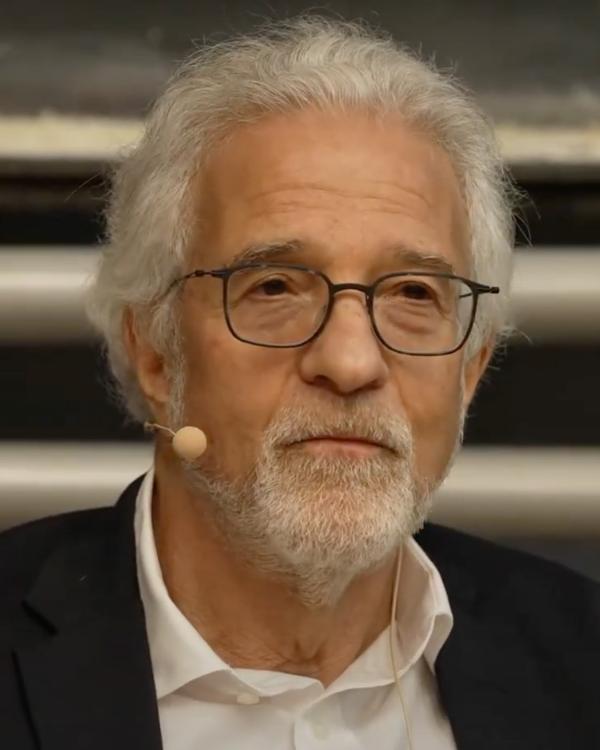
Omer Bartov Photo: Bildungsstätte Anne Frank
In this light, he also debunks the notion that Israel is fighting a “war” in Gaza, as Israel, the U.S. and most mainstream commentators claim, including the New York Times. “For the last year, the I.D.F. [Israeli Defense Force] has not been fighting an organized military body,” he writes, due to Israel’s devastating attacks on Hamas. “Today the I.D.F. is primarily engaged in an operation of demolition and ethnic cleansing.”2
It is very significant that his analysis is appearing now, as Israel’s systematic slaughter and devastation in Gaza is reaching ever more barbaric levels, and in the pages of the New York Times, which has studiously avoided truthfully calling out Israel’s towering crimes for the genocide that they are.
The Sharp Divide Between Genocide Scholars and Holocaust Historians
Bartov writes, “A growing number of experts in genocide studies and international law have concluded that Israel’s actions in Gaza can only be defined as genocide.” And he warns, “The continued denial of this designation by states, international organizations and legal and scholarly experts will cause unmitigated damage not just to the people of Gaza and Israel but also to the system of international law established in the wake of the horrors of the Holocaust, designed to prevent such atrocities from happening ever again.”3
He also delves into the implications of the sharp division between genocide scholars and those focused on the Holocaust, which he argues is “not merely a squabble within academe,” but has broad implications on “politics, education and identity.”
“To this day, only a few scholars of the Holocaust — and no institution dedicated to researching and commemorating it — have issued warnings that Israel could be accused of carrying out war crimes, crimes against humanity, ethnic cleansing or genocide.”
He continues, “This silence has made a mockery of the slogan ‘Never again,’ transforming its meaning from an assertion of resistance to inhumanity wherever it is perpetrated to an excuse, an apology, indeed, even a carte blanche for destroying others by invoking one’s own past victimhood.”
Bartov worries that this denial will prevent Holocaust Museums from conveying the broader, universal lessons of the Holocaust—including “the promotion of tolerance, diversity, antiracism and support for migrants and refugees, not to mention human rights and international humanitarian law … and the urgent need never to let inhumanity take over the hearts of people and steer the actions of nations in the name of security, national interest and sheer vengeance.”
Some Holocaust scholars have not only denied Israel’s crimes in Gaza, they’ve accused genocide scholars of engaging in “incendiary speech, wild exaggeration, well-poisoning and antisemitism.”
Bartov worries about the possibility that “the study of genocide as a whole will not survive the accusations of antisemitism, leaving us without the crucial community of scholars and international jurists to stand in the breach at a time when the rise of intolerance, racial hatred, populism and authoritarianism is threatening the values that were at the core of these scholarly, cultural and political endeavors of the 20th century.”
Professor Bartov is identifying very serious and pivotal issues and debates that we all need to be paying attention in this moment when the genocide in Gaza is escalating, Trump fascism is rapidly moving to consolidate its power here in the U.S., and the fate of the Palestinian people hangs by a thread.

