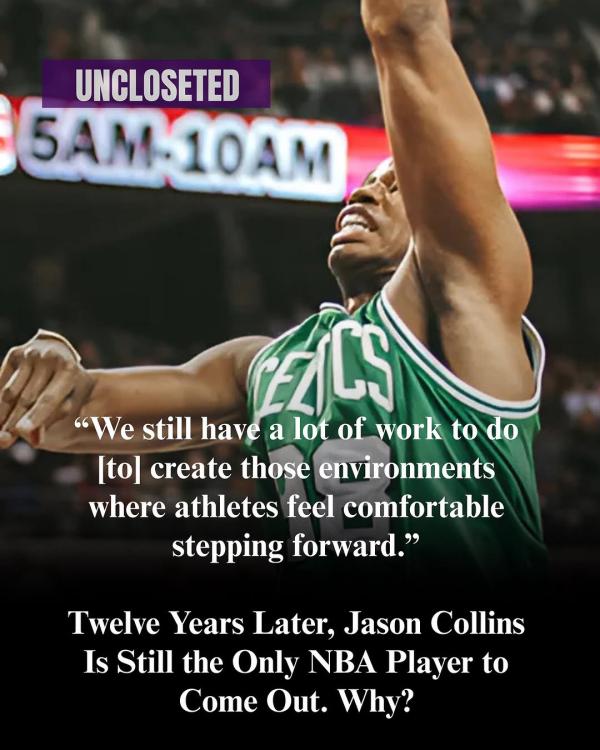
Jason Collins, when he was playing for the Celtics, 2013. Photo: @JasonCollins_98 IG
Jason Collins, the former NBA (National Basketball Association) player, sadly passed away this week from brain cancer at the age of 47. Collins was the first athlete in the four major North American professional sports leagues in football, basketball, baseball and hockey to publicly come out as gay while he was actively playing.
Collins played in the NBA for 13 years. As a 6’-10” center, he specialized in playing defense and defending the basket. When he signed with the Boston Celtics, the Celtics President of Basketball Operations said, “Jason’s ability to defend in the post (the area around the basket) will be a great addition to this team.” On offense, he was precise in being able to block off other players from the person with the ball allowing them to shoot without interference. All though he did not have high statistics, his value to the team was in other areas, including his leadership. In 2013, ESPN’s Tom Haberstroh called Jason a "no-stats all-star." During Jason’s career, he helped lead the New Jersey Nets to the NBA Finals in 2002. While playing for the Boston Celtics, he wore the number 98 to honor Matthew Sheppard, who was gay and was beaten, tortured, and murdered in 1998.
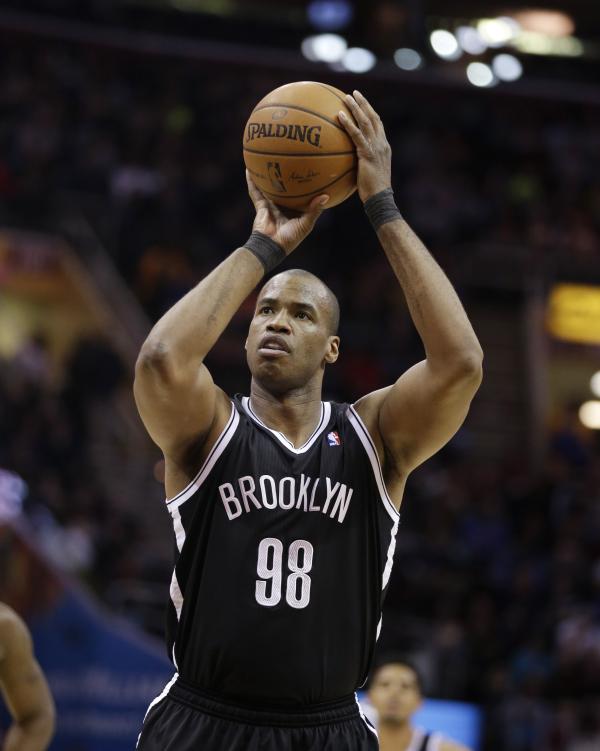
In a May, 2013 Sports Illustrated article, Collins said in an interview, “I'm a 34-year-old NBA center. I'm black. And I'm gay. I didn't set out to be the first openly gay athlete playing in a major American team sport. But since I am, I'm happy to start the conversation. I wish I wasn't the kid in the classroom raising his hand and saying, ‘I'm different’. If I had my way, someone else would have already done this. Nobody has, which is why I'm raising my hand.”
After he retired from the NBA, he served as a dedicated NBA Cares Ambassador, spreading goodwill, promoting inclusion, and mentoring youth. He worked with players, community, and NBA corporate partners to promote inclusion and community service. He was a vocal advocate for inclusion of gay people in sports.
Right after Collins’s interview, Sports Illustrated wrote an article about that interview:
At some point the idea of having no openly gay athletes in a league might sound as unimaginable as a ball field segregated by race. But today Collins becomes the first active male athlete in a major U.S. team sport to come out of the closet. Yes, that's a lot of qualifiers. Yes, it may be an artificial construct. But it is a milestone. Tens of thousands of men have played in the NFL, NBA, NHL and Major League Baseball. Until today none had expressed his homosexuality before retirement….
Barely five minutes into a wide-ranging, hours-long conversation, Collins expressed a debt of gratitude for the other athletes, gay and straight, who helped accelerate this climate change, as it were. If he is the trailblazer, a team of others cleared the brush. Martina Navratilova, who's not only regarded as the first active athlete to come out but also did so at the peak of her career? John Amaechi, the NBA player who came out of the closet in 2007, four years after his NBA career ended? NFL players Chris Kluwe and Brendon Ayanbadejo, "straight allies," who became gay rights advocates, especially within the last year? "The words thank you aren't enough," says Collins.
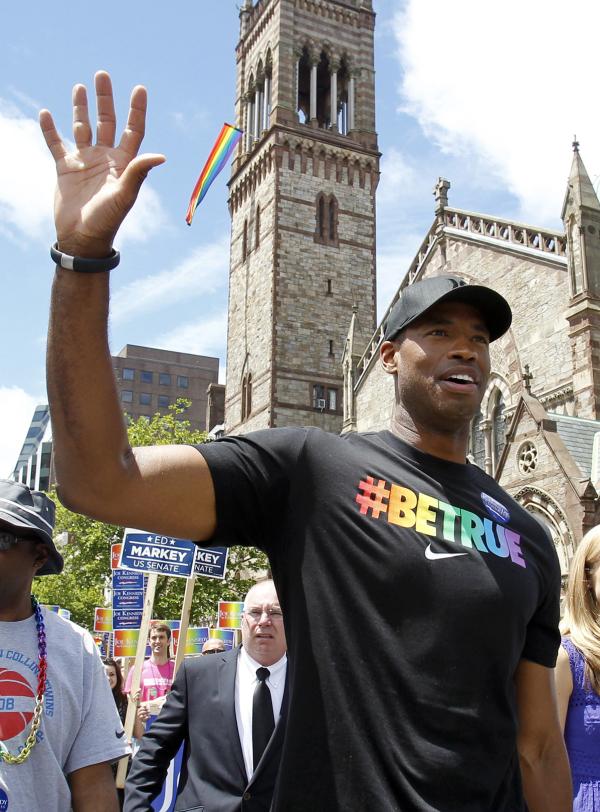
After Collins' death last week, a controversy broke out over gay athletes in professional sports on ESPN’s Inside the NBA program. Former NBA player Kenny Smith suggested it would not be a “big deal” if a professional athlete came out today. Smith said, “You say … ‘What’s the big deal?’ If somebody said that they’re openly gay, what’s the big deal? Well, 13 years ago, it was a big deal. And the reason why it doesn’t feel as big now at times is because of people like him (Jason Collins).” Charles Barkley, who played in the NBA, responded to Smith, “In fairness now, if another guy did it, it would still be a big deal because we live in a homophobic society. And that’s unfortunate… First of all, anybody who thinks we ain’t got a bunch of gay players in all sports, they’re just stupid. But there is such animosity toward the gay community. And that’s what’s really unfortunate.” (Barkley has stood out for being outspoken for the rights of gay people and has called out anti-gay culture in sports, within the Black community, and more broadly.)
A huge part of the culture in the male sports locker room is the “guy culture” that has been indoctrinated into the players ever since they were little kids. This is a culture of rape, homophobia, violence against women, being a strong man (man-up) and not weak “like a woman,” and bullying. Male sports play a huge role in the cultural arena in spreading this “guy culture” more broadly in society. (see Cheers to Football Player Michael Sam: "I'm African-American and I'm Gay")
Bob Avakian speaks to the importance of the struggle against the oppression of gay people in BAsics 3:25:
We also need to be aware of the positive—and in significant ways “subversive of the system”—potential of the assertion of gay “identity” and gay rights, even with the very real contradictions in this, including the narrowing tendencies of “identity politics” as well as conservatizing influences related to traditional marriage, and, for that matter, the campaign to be allowed to be part of the imperialist military while being openly gay. Even with all that, in its principal aspect this has, and can to an even greater degree have, a very positive, “subversive of the system” effect. This is a contradiction which, in the society overall, is “out of the closet.” It could be forced back into the closet, and underground, with not only the stronger assertion of the kind of fascist movement that is being supported and fostered by powerful ruling class forces in this period, but with the actual assumption of a fascist form of bourgeois dictatorship. But the struggle against the oppression of gay people is not going to be easily suppressed. We should understand the potential of this as well, and the need to relate correctly to this, to foster the further development of its positive potential and its contribution to the movement for revolution.
What Jason did was a milestone in professional male athletics. It was a breakthrough for the gay community. It was tremendous bravery on his part. It potentially opened up a window for all those gay athletes who are currently playing.
Thirteen years ago, Jason Collins opened a crack in the American society sports closet. Jason walked through that crack despite the fact that he might have faced a lot of repercussions. These repercussions were real then and they are more real today with the vicious assault on LGBT people coming from the Trump fascist regime.
We should all say in Jason’s memory, “Jason, we give you a heartfelt thank you, for raising your hand. The world is a little bit better place because you did it. You will be missed, but what you did will live on.”