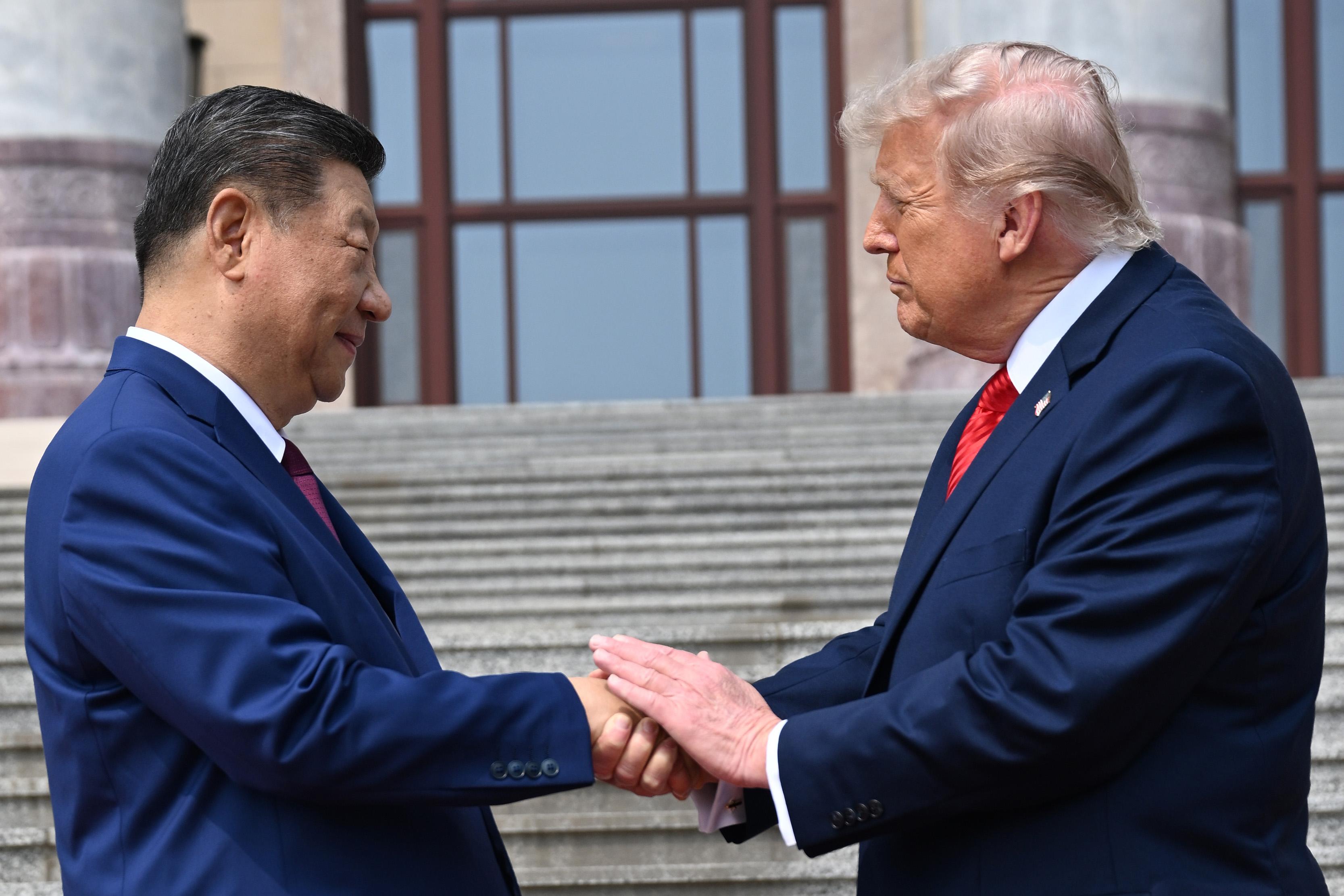
Chinese President Xi Jinping shakes hands with U.S. President Donald Trump in Beijing, May 14, 2026. Photo: AP
We, the people of the world, can no longer afford to allow these imperialists to continue to dominate the world and determine the destiny of humanity. They need to be overthrown as quickly as possible. And it is a scientific fact that we do not have to live this way.
—Bob Avakian, revolutionary leader, author of the new communism
Last week, Donald Trump traveled to China for a high-stakes May 14-15 summit with Chinese leader Xi Jinping. It was the first time in nine years a U.S. president had visited China.
Background on the Question of Taiwan
At the summit, Xi made clear that any moves on the part of the U.S. supporting independence for the island of Taiwan could touch off, in his words, an “extremely dangerous situation.” Xi was strongly signifying that this flash-point of tension could become a trigger-point for war. Why is Taiwan so central to U.S.-China rivalry? Read more.
China literally rolled out the red carpet for Trump. But behind the lavish state dinners and smiling handshakes, high-stakes struggle was going on between these two imperialist gangsters. Both powers are feverishly building up their militaries.1 Both powers are moving, or trying to move, into new territories. But both powers are also driven to seek advantages, at least for now, through diplomatic maneuvering.
The “Thucydides Trap”: What It Reveals…
Xi Jinping launched the summit with a sharp warning to the U.S. In his opening remarks on May 14, Xi asked: “Can China and the United States transcend the so-called ‘Thucydides Trap’ and forge a new paradigm for major-power relations?”
Xi was referring to Thucydides, a historian in ancient Greece who argued that the Peloponnesian War of 431 BC took place because “the rise of Athens and the fear that this instilled in Sparta that made war inevitable." At the time, Sparta was the established power and Athens was rising. As the Spartans began to fear the rise of Athens, they moved militarily against them and crushed them. This metaphor became a major way that people were being led to understand what was happening.
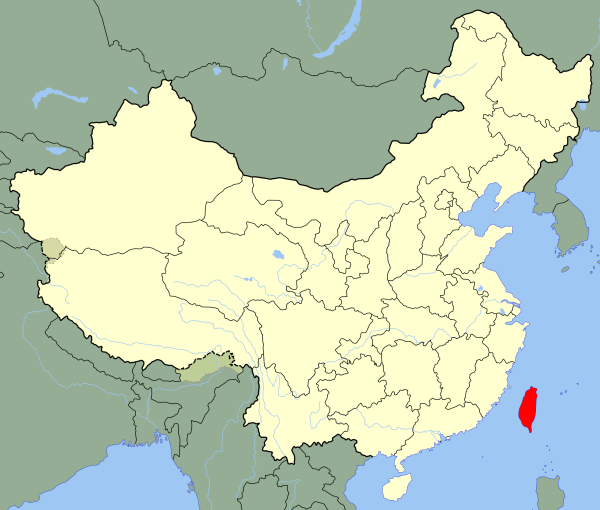
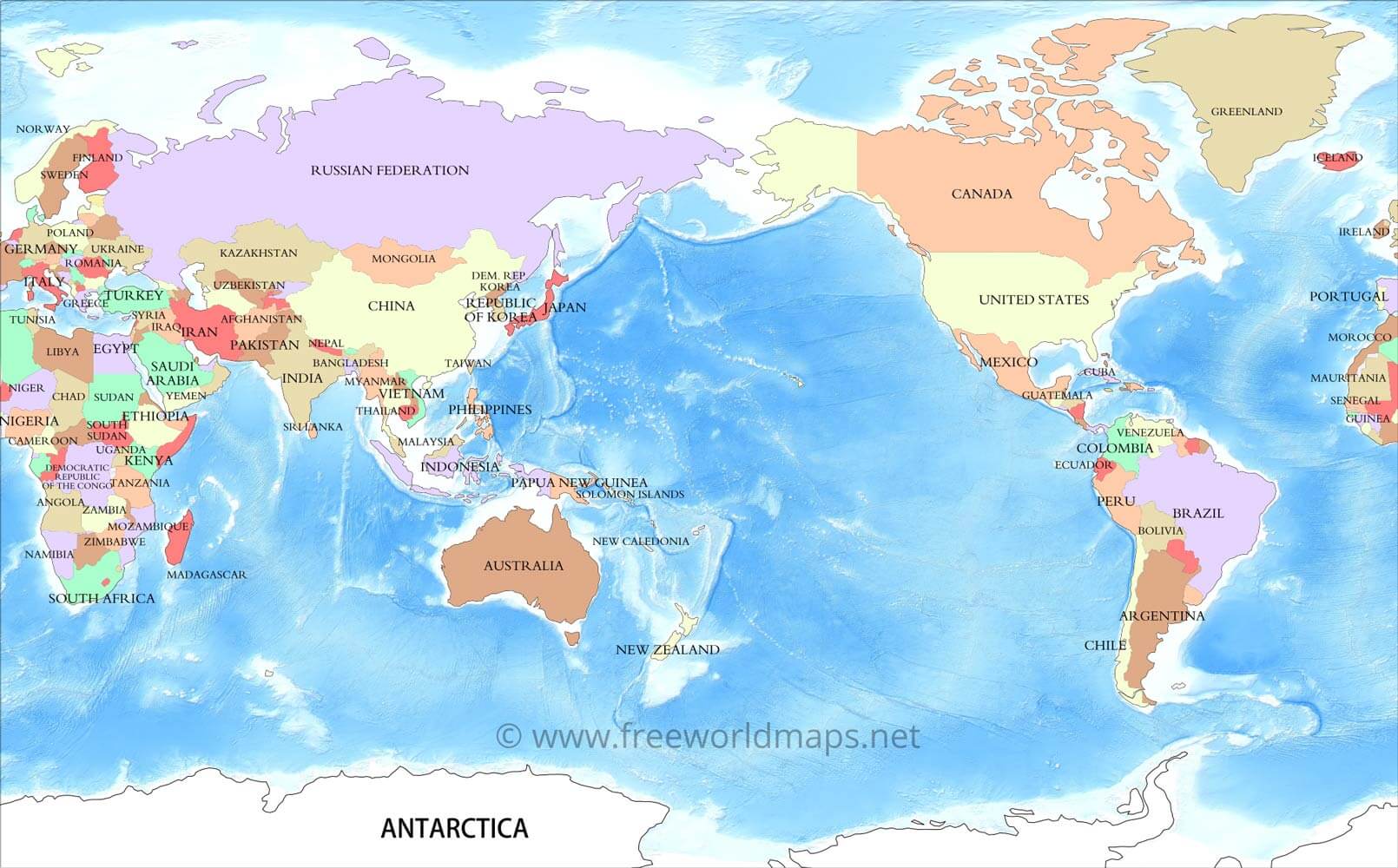
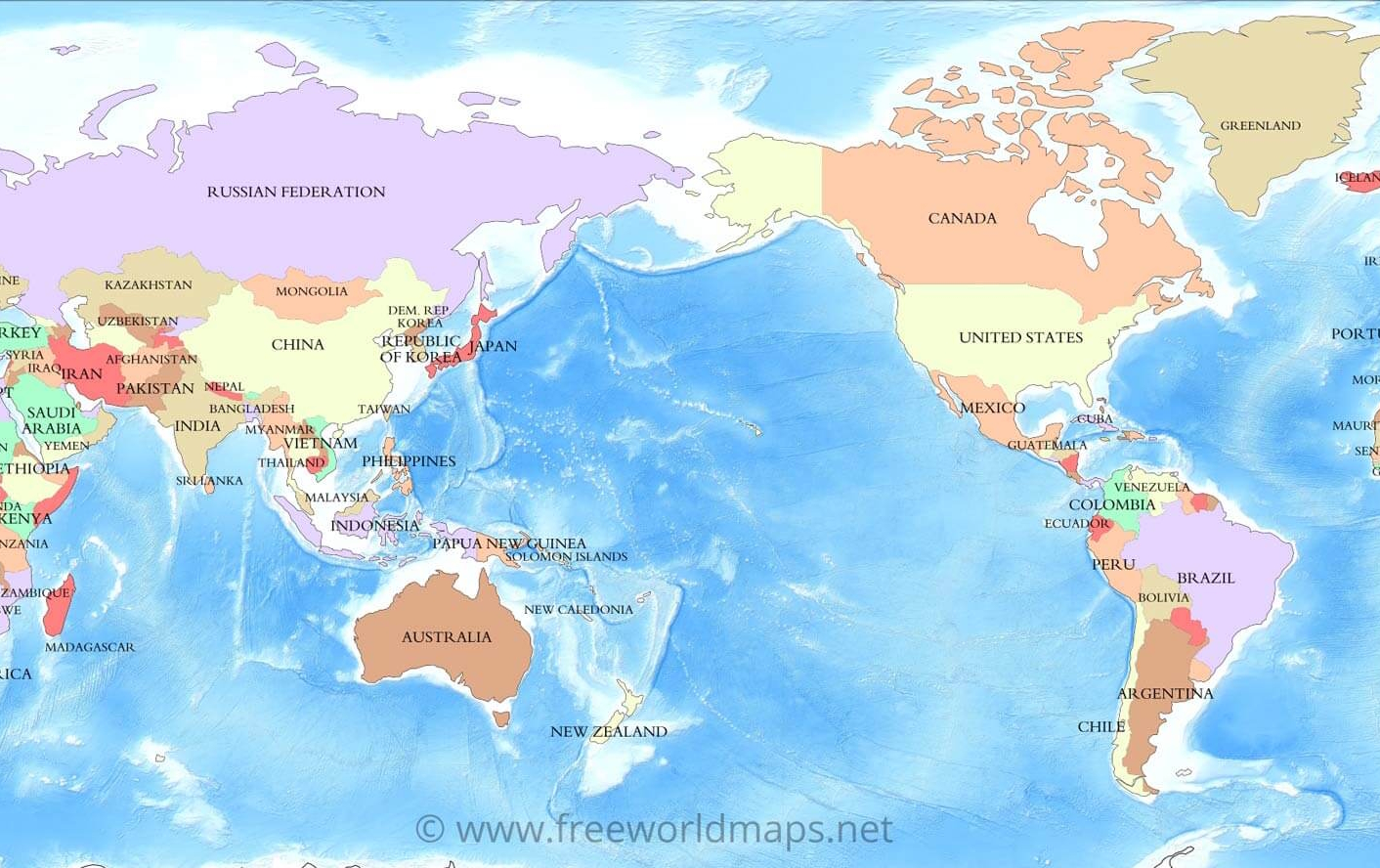
Map of China with Taiwan located
Xi coupled this reference with drawing a bright red line around the most contentious and dangerous of China’s core interests: the island of Taiwan. Taiwan is considered to be part of China by the United Nations but functions as an independent state. Particularly under Biden, the U.S. encouraged Taiwan to build up its military strength and Biden made a number of provocative—and unprecedented—comments on the U.S. being willing to militarily defend Taiwan in the event of a Chinese attack. Xi warned Trump that if Taiwan was “handled poorly, the two countries will collide or even clash, putting the entire U.S.-China relationship in an extremely dangerous situation."2 (See Box: Background on the Question of Taiwan.) Shortly before the summit, the U.S. had forged an agreement to sell Taiwan $14 billion in arms—an agreement that Trump has not yet signed off on.
This was pure gangster on Xi’s part: essentially, don’t mess with what we perceive to be our core interests in Taiwan and we can avoid the Thucydides trap… for now.
…And What It Conceals
At the same time, the “Thucydides trap” conceals more than it reveals. At root, what’s driving the U.S. and China toward confrontation—possibly war—is not simply the existence of a dominant and a rising power. It is the underlying expand-or-die dynamics of their capitalist-imperialist systems.
China has not been a revolutionary socialist state for 50 years now. Following Mao Zedong’s death in 1976, socialism was overthrown and “China has since emerged as an exploitative capitalist-imperialist power contending with U.S. imperialism for global domination,” as Raymond Lotta has written.
Today, the U.S. and China are the two main imperialist superpowers in the world. Together, they account for over forty percent of the entire global economy and nearly half the world’s military spending. The rivalry between these two nuclear-armed, global predators has been dangerously escalating for well over a decade, politically, economically, and militarily.
Over the last two decades, there has been a tremendous shift in global economic power. The U.S. share of world production has been declining while China's economic strength has grown rapidly as this rising imperialist power seeks its own spheres of influence around the world.
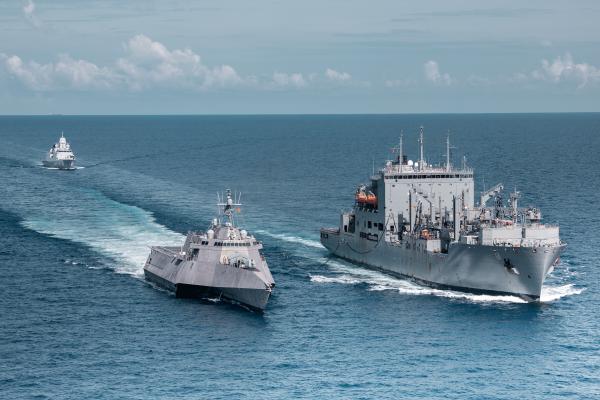
U.S. and Netherlands conduct joint military exercises in South China Sea, May 22, 2024. Photo: U.S. Navy
The U.S. under Trump has been waging a form of economic warfare against China with tariffs and other attempts to limit China's reach and influence. The U.S. has been building up and modernizing the imperialist military might, including nuclear weapons. It is giving focus to its advantages in certain high-tech sectors. It has been aggressively tightening its hold on the Western hemisphere—the invasion of Venezuela, the severe economic warfare against Cuba and the threats to take over Greenland all being prime examples. (See, A Strategy for a Fascist America Dominating the Planet, revcom.us, December 15, 2025)
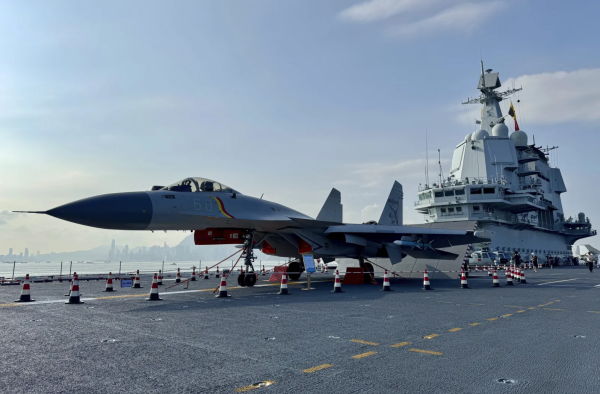
China's first domestically built aircraft carrier Shandong sails into Hong Kong for port call, July 3, 2025. Photo: AP
In the face of this, China's economic advance has only accelerated. This includes its competition for greater control over the world market; its access to and dominance over critical raw materials; its further development of “high-tech”; and its attempts to counter the role of the dollar in world trade.3 And China has also been embarking on a major military buildup and projection of power—penetrating into Asia, Africa, and South and Central America.
Which side is the greater danger? Both… and neither.
That is, either one of these monsters could feel compelled—whether by the prospect of a strategic gain by the other one, or strategic defeat for themselves—to raise the stakes of the gamble… and miscalculation along with imperialist logic could lead to nuclear holocaust.
These were the underlying and accelerating dynamics beneath the summit; and these are the dynamics that provide the context for Bob Avakian’s point in HUMANITY ON THE BRINK: A Forced March Into the Abyss, or Forging a Way Forward Out of the Madness? that:
There is the all too present, and now once again increasing, danger of nuclear war, particularly between the U.S. imperialists on the one hand and Russia and China, also capitalist-imperialist, on the other hand.
What Did—And Did Not—Result From This Summit?
Trump called the summit “an incredible visit…I think a lot of good has come of it.”
Xi said it was a “milestone”: "We have established a new bilateral relationship, or rather a constructive, strategic, stable relationship."
But when you drill down, as the New York Times reports, no “clear resolutions on trade, Taiwan, the war in Iran or other points of contention” were announced.4
This fact of no major agreements or breakthroughs testifies to the highly fraught and dangerously escalating competition between the two major imperialist powers in the world. And any agreements that might surface afterward reflect but a temporary truce, and/or expressions of competitive positioning for advantage.
Indeed, even as the summit was taking place, the U.S. and China were both stepping up their efforts to undercut the other.5
Democrats React to the Summit—
With American Chauvinist Warmongering!
Democrats and leading liberals have sharply criticized what they call Trump’s “conciliation” and “softness” toward Xi during the China summit. The former U.S. ambassador to China told PBS that Trump’s “gushing approach” to Xi weakens Trump and the U.S., making it look like a supplicant, not a dominant power. He was especially upset that Trump didn’t confront Xi on Taiwan: “Xi Jinping…his major message at the summit yesterday morning, was to try to intimidate the United States, that if you cross our red lines, he said, on Taiwan, that we will end up in a conflict. We should not be intimidated or coerced by the Chinese president. No prior president has.”6
Bob Avakian: Free Yourself from the GTF! The Great Tautological Fallacy
Here is a question every person concerned about humanity and the future—including if there is even going to be a future for humanity—needs to answer. Are you part of the “we” that this imperialist hack says “should not be intimidated?” Are you willing to not just lay down your own life but put at risk all of life to defend a system whose power was built on cruelty, enslavement, theft and bitter exploitation and whose empire today rests on more of the same, not just or even mainly within this country but around the world, in terribly brutal conditions?
Then there are liberal anti-Trumpers like Heather Cox Richardson (From Letters from an American, May 15) who seem troubled by the prospect that China has become America’s equal, rather than a supplicant at the table of global power.
She quotes Biden’s former China director on the National Security Council, who told the Washington Post: “Xi has done something Chinese leaders have been working toward for decades—bringing an American president to Beijing as an undisputed peer. Xi used the opulent optics of the visit to make clear to the world that China and the United States are the two dominant, equally matched superpowers. There is no going back.”
Richardson is a historian who has done valuable work on the Civil War, Reconstruction, and more. She of all people knows the U.S.’s bitter founding on slavery and genocide. It’s history, right up to today, of supporting and carrying out horrific crimes—from 407 years of enslaving, brutalizing, and murdering Black people, to killing millions in its wars of empire around the world, and most recently supplying the bombs of genocide to Israel in Gaza. (And here we aren’t even talking about America’s role as the greatest climate criminal in world history.)
Yet Richardson, too, falls in line behind expressing her concern that the U.S. was losing its edge over China. Again, you are defending an empire, one that has taken nearly 15 million lives to “defend its edge” since World War II alone. It is crucial that people like Richardson and those who follow her be challenged on her thinking and compelled to face reality.
The summit underlines the urgency of the situation we face. People have to be challenged, with substance and fact, to think anew. Learning to live with—and to choose between—oppressive, reactionary powers is not the only choice we have. The real choice facing everyone is whether to put up with and hope to find a place within this madness as it hurtles humanity toward the abyss… or to seriously look into and grapple with the real alternative that has been brought forward, crystallized in the Constitution for the New Socialist Republic in North America, by Bob Avakian.
Again, as Avakian has urgently emphasized:
We, the people of the world, can no longer afford to allow these imperialists to continue to dominate the world and determine the destiny of humanity. They need to be overthrown as quickly as possible. And it is a scientific fact that we do not have to live this way.
Background on the Question of Taiwan
At the summit, Xi made clear that any moves on the part of the U.S. supporting independence for the island of Taiwan could touch off, in his words, an “extremely dangerous situation.” Xi was strongly signifying that this flash-point of tension could become a trigger-point for war. Why is Taiwan so central to U.S.-China rivalry?
Taiwan is 100 miles off the coast of the mainland of China. After the victory of the Chinese revolution in 1949, the U.S.-supported reactionaries in the Chinese civil war fled to Taiwan where they ruled for decades through martial law and established a viciously exploitative economy—again backed by U.S. imperialism. U.S. naval forces routinely patrol the region and sail warships through the Taiwan Strait. By international law, the People's Republic of China is recognized as the only legitimate representative of all of China, including Taiwan. But Taiwan remains a self-governing territory that receives billions of dollars of U.S. military aid.
For U.S. imperialism, keeping Taiwan outside of China's direct control contributes to projecting U.S. global power in a critical part of the world, through a network of islands extending from Japan to the Philippines. And today, Taiwan has emerged as the leading producer of advanced chips that are the “brains” for sophisticated computing, AI, and new military technologies. For the capitalist-imperialists who rule China today, absorbing Taiwan would greatly counter U.S. naval power and give it more freedom of maneuver—and also enable China to gain direct control over vital semiconductor supply chains. For China, any moves on the part of the U.S. to diplomatically and militarily back total independence of Taiwan would be an act and declaration of war.
Over the past few years, China has been ramping up its military pressure on Taiwan. It conducts almost daily air and naval operations in the Taiwan Strait. It carries out large-scale military drills and “war games” around the island. As it has been increasing its overall military spending, China has also been more forcefully reasserting its sovereignty over Taiwan, as Xi did at the recent summit. U.S. imperialism has maintained its military aid and arms sales to Taiwan. A record $14 billion sale is awaiting final approval, a package that includes highly advanced military weaponry. At the same time, Japan, at the urging of U.S. imperialism, has lifted limits on military spending and arms exports—and is undertaking its most massive rearmament since the end of World War 2 (Japan had waged brutal war on China in the 1930s and 1940s).