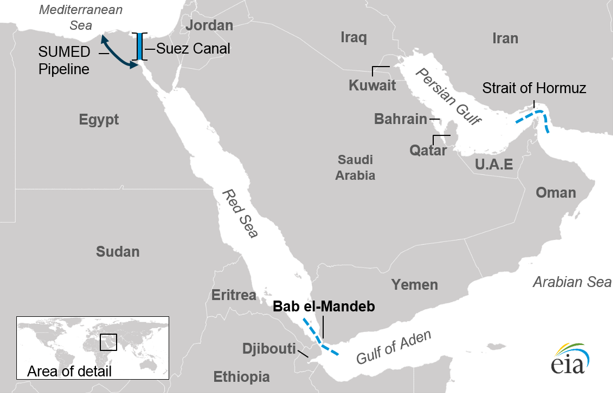
The Bab el-Mandeb Strait and the Strait of Hormuz. Map: U.S. EIA
For over seven months, the U.S. has waged an utterly unjust, unprovoked, imperialist war against Iran. This has caused immense suffering to a people of Iran—a people already suffering under an oppressive regime. But the U.S. has been unable to impose its will and win the war, and Iran has hit back by making it much more difficult for oil to be shipped through the Strait of Hormuz, which borders Iran. Last week a dramatic development with potentially major implications took place along the Red Sea coastline of the country of Yemen.
For a fuller understanding of the war itself and its character go here and here.
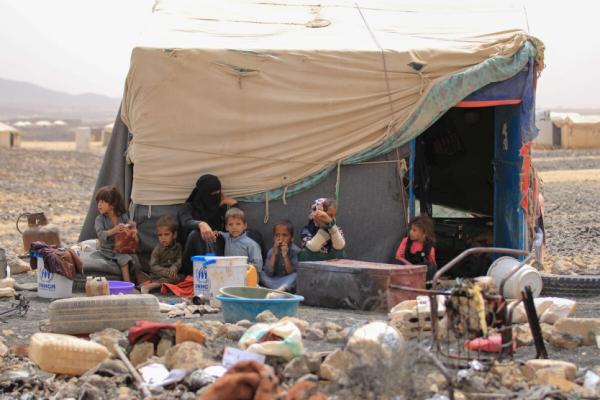
June 1, 2021: Twenty million people in Yemen need humanitarian aid and four million are internal refugees with nowhere to flee. Photo: UNHCR
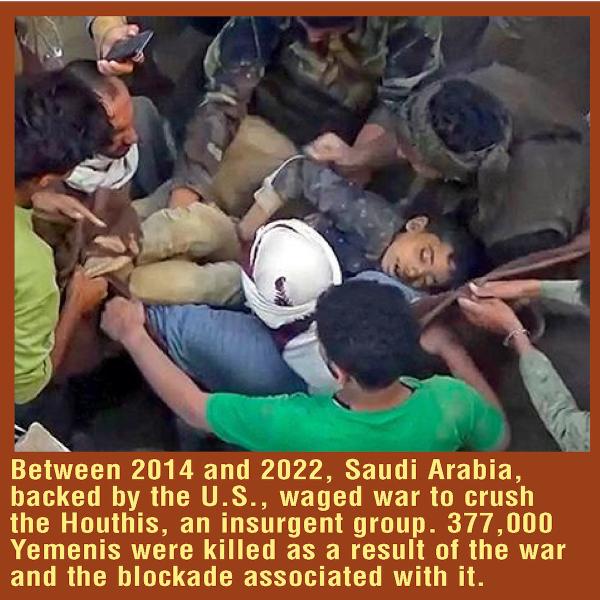
To set the stage: Yemen’s 43 million people are among the most impoverished in the world. The Houthis are an Islamic fundamentalist organization which governs northwest Yemen and is allied with Iran. Since 2014, the Houthi regime has been engaged in an on-again, off-again war with Saudi Arabia, its Yemeni allies, and the U.S.1 This war, along with disease and starvation arising from Saudi blockades, took an estimated 377,000 lives by the end of 2021! A ceasefire was signed in 2022, but the fighting re-ignited this July after a Saudi attack on Sanaa, Yemen’s capital. The Houthis then declared a blockade of Saudi shipping and launched strikes on Saudi oil facilities and ships in the Red Sea.
The new development: On Tuesday, September 8, things took a leap. Yemen’s Houthis launched a wave of missile and drone attacks on Saudi Arabia, setting oil installations ablaze and wounding more than 70 people. Then on September 10, Houthi forces advanced south. They routed the pro-Saudi forces and took control of the strategic port city of Mokha. The next day the Houthis seized Perim Island at the mouth of the Bab al-Mandab Strait, a strategic chokepoint linking the Red Sea (and the Suez Canal) to the Indian Ocean and shipping routes east to Asia.
This puts the Houthis, at least for now, in control of Yemen’s entire Red Sea coastline. Some 12 percent of world maritime trade (trade by sea) normally flows through this narrow waterway at the end of the Red Sea. Since the U.S.-Iran war has largely shut down the Strait of Hormuz, it has been a key route for Saudi Arabia to continue shipping at least some oil.
Saudi Arabia, one of the world’s most important oil producers, normally ships between 9 and 11 million barrels of oil a day. But the war on Iran has drastically cut that by more than two-thirds. Now that the Houthis control the Bab al-Mandab Strait, they could be in position to cut Saudi shipments even more.2
These developments mean that two of the world’s most critical transit routes for energy shipments—the Strait of Hormuz at the mouth of the Persian Gulf and the Bab al-Mandab Strait, at the entrance to the Red Sea—are now largely closed, and largely controlled by Iran and its Houthi allies.
This has major implications for Saudi Arabia, the region, the U.S., and the world economy as a whole. (The New York Times reports, “A steady supply of Saudi oil is critical to keeping global energy prices stable.”)
A Heightened Danger of Widening War…With Further Developments in Iran as Well
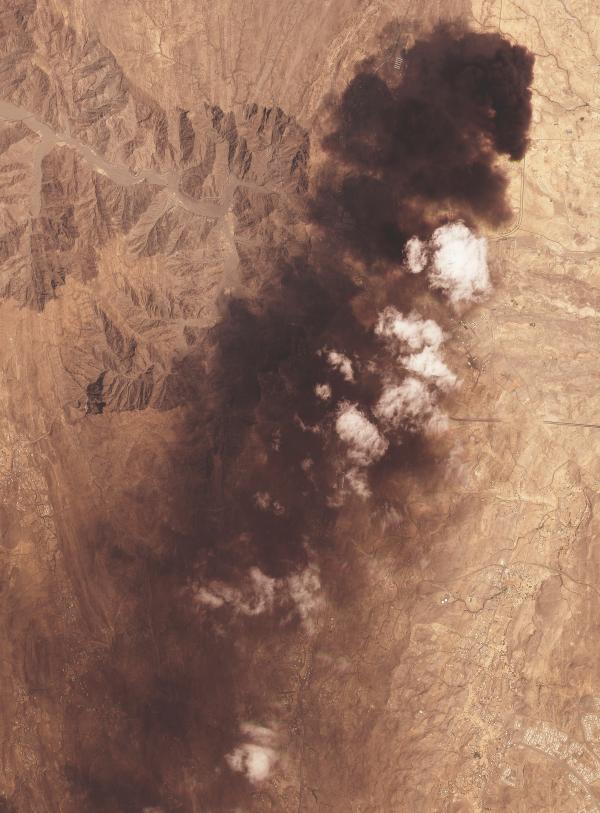
A plume of black smoke rising from a Saudi Aramco oil refinery, Saudi Arabia, September 8, 2026. Photo: AP via Planet Labs PBC
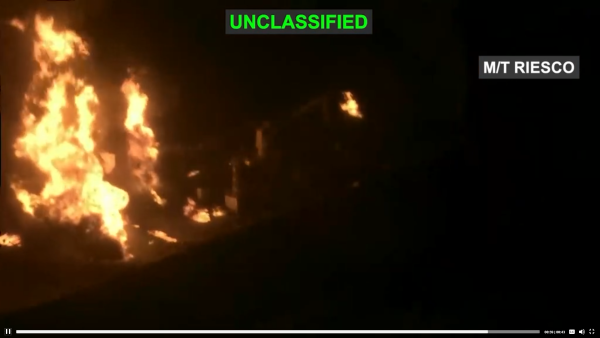
U.S. Central Command destroys Iranian oil tanker M/T Riesco in Gulf of Oman, September 8, 2026. Screenshot: USCENTCOM video
Saudi Arabia has largely tried to stay out of the U.S. war on Iran, but it may now feel compelled to take military action against the Houthis. Saudi ruler Mohammed bin Salman reportedly called Trump and urged him to bomb the Houthis. Trump apparently declined—at least for now. But according to CNN, “More than 100 U.S. military advisers are on the ground in Saudi Arabia providing intelligence and targeting support to the Kingdom in its military campaign against the Iran-backed Houthis in Yemen.”
As these developments were unfolding, the back-and-forth combat between the U.S. and Iran over control of the Strait of Hormuz was continuing. Last week at least 15 vessels were hit by the U.S. or Iran. This included U.S. attacks on five of Iran’s civilian oil tankers, and at least two Iranian attacks on U.S. Navy warships. This too points to the ongoing danger that this war could spiral out of control. Think about it: Iran’s attacks apparently didn’t damage the U.S. warships, but what if they had? Or what if they had seriously wounded or killed U.S. military personnel? Something like that could make Trump feel compelled to seriously escalate the whole war, with even more uncertain and potentially dangerous consequences.
And what starts in Iran does not necessarily end there. Foreign Affairs, a major journal of the non-fascist section of the U.S. ruling class, argues that the Houthi takeover:
marks a profound shift in the balance of power in Yemen, with potential consequences for the entire region…The war in Yemen has long been a battlefield for regional powers. But the latest stage could see expanding involvement from Israel, Russia, Turkey, and the United States. Rather than a battleground for regional influence, Yemen could become a platform for major-power competition centered on a critical maritime chokepoint. [Emphasis added]
Again, all this dangerous madness—madness that could spin out of control into a much larger war—is needless. It is nothing but a product of the capitalist-imperialist drive to dominate their rivals and control the resources and people of the vast majority of the world and, in particular in this case, the strategic Middle East region.
As Bob Avakian has said:
We can no longer afford to allow these imperialists to continue to dominate the world and determine the destiny of humanity. And it is a scientific fact that humanity does not have to live this way.
Follow revcom.us for ongoing coverage of this extremely volatile situation.

