The family biography of Bernardine Dohrn, Bill Ayers, and their sons has provoked a good deal of commentary because, as one might expect, the mainstream media has seized upon the book to “prove” two major pillars of establishment thought: that violence is always mistaken and has no place in American life, and that the family should always come first.
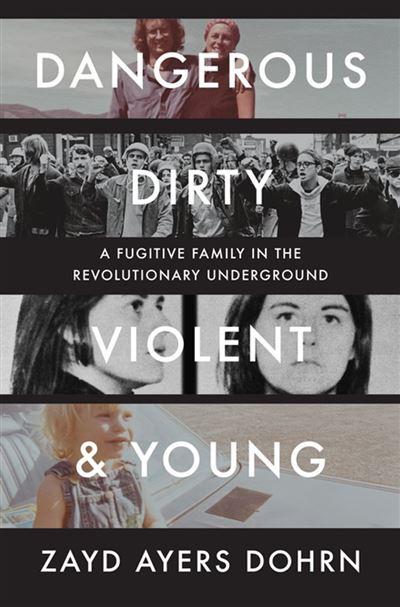
Bernardine Dohrn and Bill Ayers were two leaders of a political action grouping in the 60s and 70s known popularly as the Weathermen. The name comes from their initiating manifesto entitled “You Don’t Need a Weatherman to Know Which Way the Wind Blows.”
The history, actions, and thinking of Weatherman have been contentious issues among radicals since the 60s. The group engaged in a number of bombings of symbols of U.S. imperialism, fought with the police, and advocated a political program which they thought would lead to revolutionary change in this country.
The new book by Bernardine and Bill’s son Zayd does provide a window into the life of the Weatherman movement, but unfortunately does not engage the critical issue of what it actually means to be a revolutionary in an imperialist country and how the Weathermen went wrong on this crucial issue.
* * * *
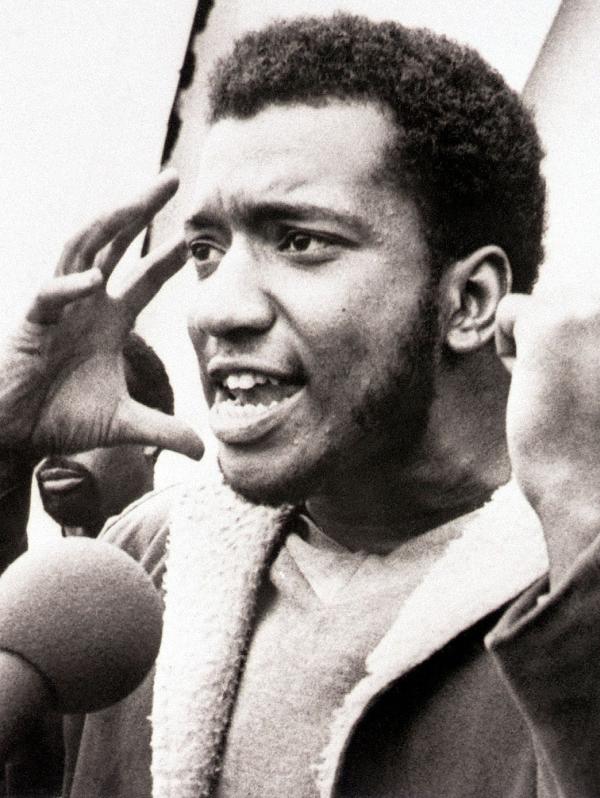
Fred Hampton, September 1969. Photo: UPI (Creative Commons)
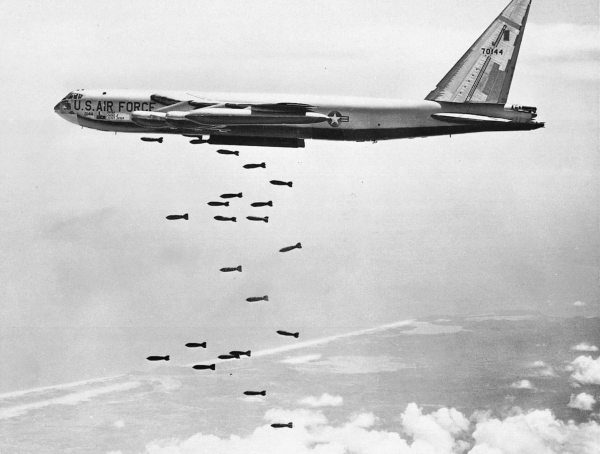
B-52 bomber dropping streams of bombs over Vietnam (undated). Photo: U.S. Air Force

Destruction in North Vietnamese capital city of Hanoi after 12 days of round-the-clock U.S. bombing, December 1972
Fundamentally, Weatherman did not believe that an actual revolution was possible in the United States, even though they very much wanted one. Instead, they believed that revolutionary social change could only come from without and that the task of “revolutionaries” in the U.S. was to act in support of revolutions in the Third World. They were followers of the Chinese communist leader Lin Biao who advocated “the countryside encircling the cities” on a global scale, in imitation of the (correct) strategy used in the Chinese revolution.
Taking off from Lin Biao, the Weatherman manifesto states, “The goal is the destruction of U.S. imperialism and the achievement of a classless world: world communism. Winning state power in the U.S. will occur as a result of the military forces of the U.S. overextending themselves around the world and being defeated piecemeal; struggle within the U.S. will be a vital part aof this process, but when the revolution triumphs in the U.S. it will have been made by the people of the whole world. For socialism to be defined in national terms within so extreme and historical an oppressor nation as this is only imperialist national chauvinism on the part of the ‘movement.’”
In other words, there was little point in working to win the people of this country in their millions to rise up and overthrow capitalist rule. And to even try to do this would be a form of national chauvinism—preempting the role of Third World peoples.
This was their “theoretical” understanding. Much more central to the actual motivation of Weatherman was a visceral desire to strike out against the crimes people were forced to watch every day on TV. Manifestations of white supremacy were everywhere and actions like the police assassination of Black Panther leader Fred Hampton cried out for action. People watched the bomb bays on the B-52s open and saw the streams of high explosives raining down on the people of Vietnam. The U.S. actually dropped more tons of bombs on the small country of Vietnam than it dropped in all theaters of WWII. You had to have lived through these experiences to understand how it affected people.
Decent people everywhere wanted to do something to make it all stop. But what?
* * * *
On July 27, 1968, Ramparts magazine printed Che Guevara’s diary of his attempt to lead a revolution in Bolivia. It was utterly engrossing. I stayed up all night to finish reading it. It probably is the saddest thing I have ever read.
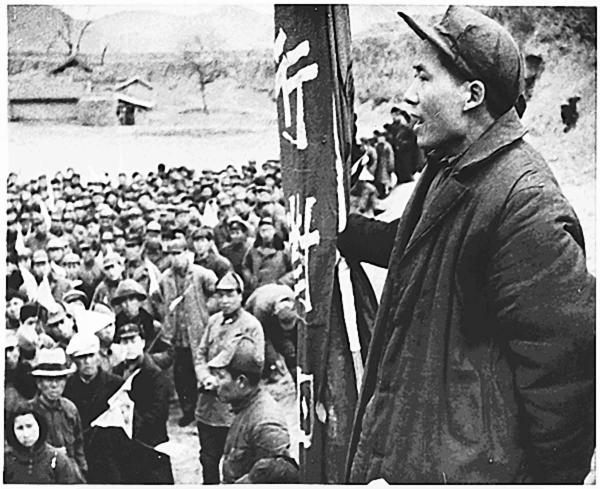
Mao Tsetung speaks to followers during the Chinese Revolution, 1944. Public domain
By 1968, I was pretty familiar with the outlines of the revolution in China, which served as a blueprint for many revolutionary movements throughout the Third World. Mao Tsetung had analyzed the social classes of China and the role of imperialist intervention. He had projected the strategy of a united front that would bring together all those forces that wanted to see China free of foreign domination and relieved of the burden of feudalism. Mao argued that following such a victory the revolution had to more or less immediately move toward socialist state power. He held that the peasantry would be critical to this revolution; and he crucially argued that because of China’s peculiar characteristics as an oppressed nation, with its enforced backwardness and isolation of the countryside, the revolution could and had to more or less immediately get under way there and—in those particular conditions—take the form of guerilla war. He argued that in order to support the revolutionary struggle, the party had to lead in building up base areas of mass support so that the revolutionaries could be like “fishes swimming in the sea.” This is different than the strategy in advanced imperialist countries.
Mao also coined the phrase “hastening while awaiting” to characterize their revolutionary work: building up the popular revolutionary forces toward the day when they could go over to the offensive and consummate the revolution.
All this was based on the conscious active participation of the people won to and working toward a “new-democratic revolution” and followed by a transition to socialism as part of a world-wide movement toward communist society.
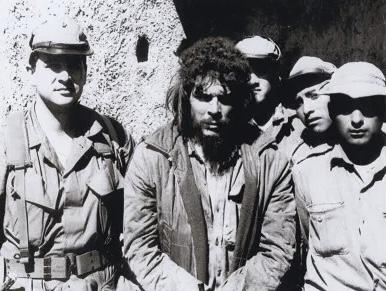
Che Guevara captured by the CIA in Bolivia, 1967. Public domain
That’s what made it so unbearably sad to read the diary of Che’s Bolivian misadventure. Nothing like this was there. There was neither analysis nor strategy. Just the idea that a small but determined foco of guerrillas could inspire a nation to rebel. Worst of all, rather than basing themselves on the people, Che found the people to be of no help: "Talking to these peasants is like talking to statues. They do not give us any help. Worse still, many of them are turning into informants." Che ran into the fact that the masses in most cases do not spontaneously want or even understand the idea of revolution. They have to be struggled with and won to this, even in conditions of dire poverty and terrible oppression.
In late 1967, the Bolivian Army, “advised” by the United States, rounded up Che’s foco and executed Che on the spot, without a trial.
* * * *
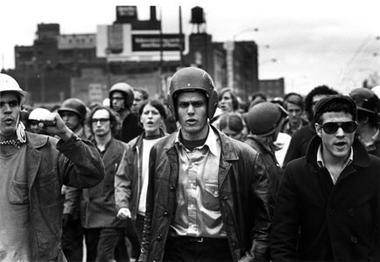
Weathermen during Days of Rage in Chicago, September 30, 1969. Photo: Wikipedia
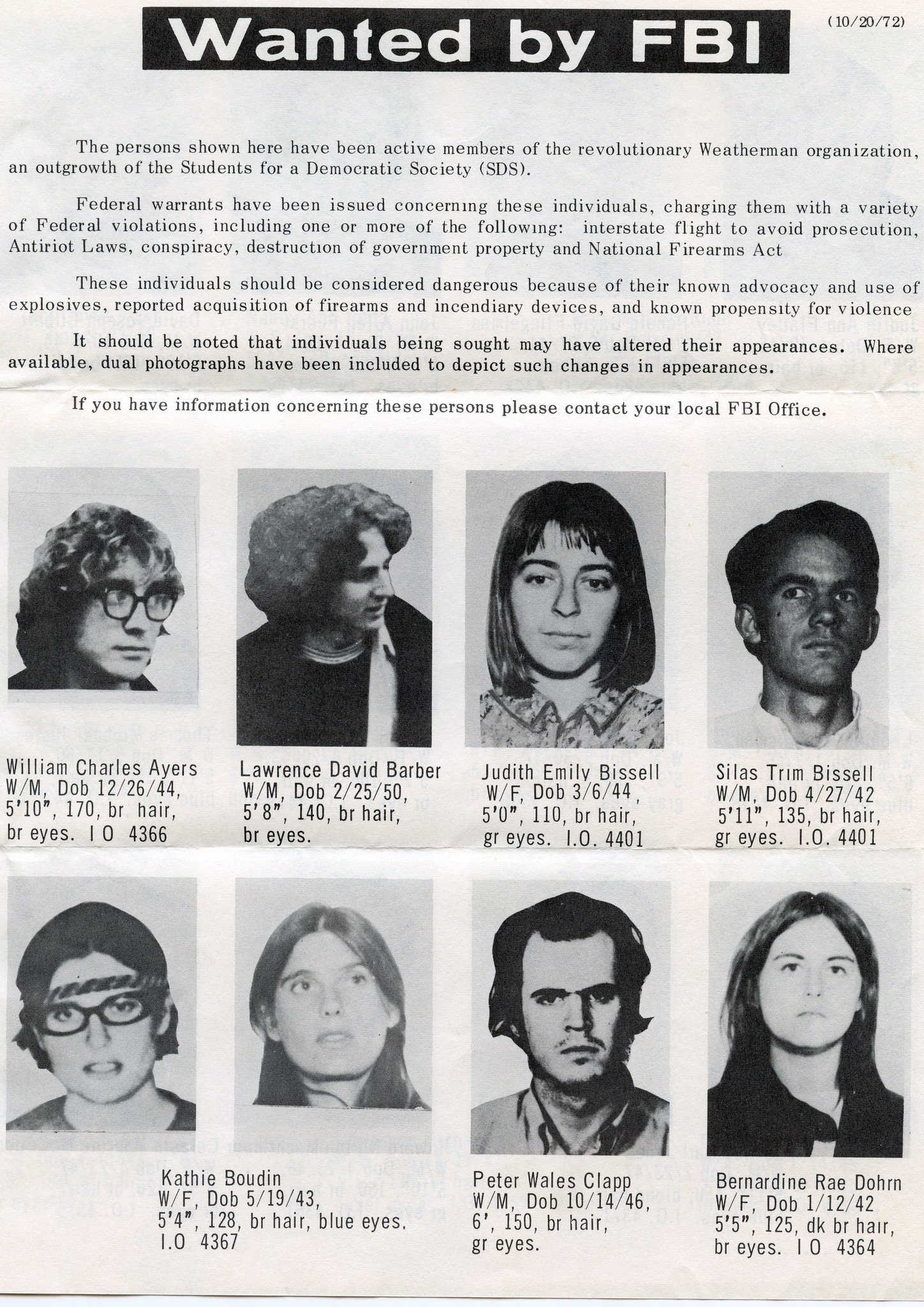
FBI Wanted Poster of the Weather Underground, 1972. CC BY-NC 2.0
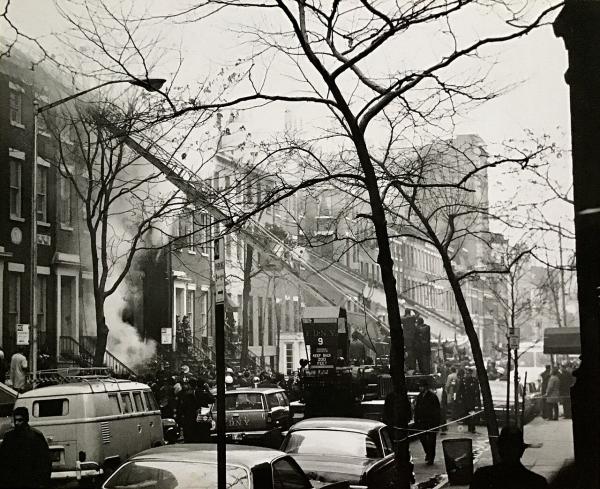
Explosion in Greenwich Village apartment, New York City, where bombs were being made, March 6, 1970. Photo: Steven Denenberg (Creative Commons)
Unfortunately, reading Dangerous, Dirty, Violent & Young was every bit as sad as reading Che’s diary. The book is very well written in short readable chapters. It tells the story of people who were as dedicated and selfless as the guerillas in Che’s foco. They were prepared to give their lives if necessary (and some did) to rid the world of racism and imperialism. But they had no science, no understanding of what it would take, nor any real strategy to go about it.
As the result they simply threw themselves at the perceived enemy; quite literally in the “Days of Rage” when Weathermen groups threw themselves into police lines wielding clubs and wearing football helmets—a tactic which Black Panther leader Fred Hampton aptly described as “Custeristic.” Shortly after this fiasco, the Weathermen went underground and began a series of bombings directed against institutions of U.S. imperialism.
Their articulated goal was to renounce "white skin privilege" and show that white “mother country radicals” would stand with Black Americans who are daily under threat of death at the hands of the police, and to strike blows at the war machine in solidarity with the people of Vietnam. In a 2020 op-ed in the New York Times, Weathermen veteran Mark Rudd wrote: “All of us were overcome both by grief over this country’s violence and by shame at not being able to stop the war. That shame also emanated from our class and racial privilege. We weren’t the ones being carpet-bombed in Vietnam or confronting racist mobs and sheriffs in Mississippi. (emphasis added)
To this, the revolutionary leader Bob Avakian has responded with a simple “'So What?!' … the fact that they were not being directly subjected to this but were outraged by it, and determined to do something to stop it, is exactly what was right about their orientation. The problem was that they abandoned and rejected the road of building a mass revolutionary movement determined to put an end not only to the slaughter in Vietnam and the violent oppression and repression ‘at home,’ but to the whole system….” This entire article by Avakian is well worth reading and highly recommended to anyone who wants to understand the whole Weathermen phenomenon and the real lessons it contains for anyone seeking fundamental change.
The Weathermen talked about ‘armed struggle.’ Whatever they did mean, they had very little sense of organizing millions to rise up against the force of the state, aiming to defeat and dismantle the forces of repression and bring in a new economic and political system; or the work to do that.1
Instead, what ensued was a series of rather spectacular bombings (preceded by warning phone calls) of symbols of imperial authority, including the New York City police headquarters, the Pentagon, the State Department, and the Capitol building, as well as the dramatic freeing of political prisoners Timothy Leary and Assata Shakur. These, combined with the total inability of the FBI to capture any of the Weathermen, were profoundly embarrassing to the government.
But nothing was done by Weathermen to actually recruit masses into a genuine revolutionary movement to defeat and dismantle the armed power of the state, and replace it with something far better. In a country like the U.S., this kind of struggle requires a revolutionary situation to make this possible. Instead, they went underground in small groups they called focos. Fred Hampton again put his finger on the issue by asking, “Who are they going to organize underground? Gophers?” In the end, both the Panthers and the Weathermen broke up into factions and died out, as the war on Vietnam concluded and the popular upsurge of the sixties ended.
* * * *
Yes, you don’t need a weatherman to know which way the wind blows. But you do need a professional weatherman—a meteorologist—to know if it’s going to rain this weekend or if a tornado is likely. The importance of science is that it helps you to understand what is behind the immediate surface appearance of events. It lets you understand the system that gives rise to those events and what may happen next. And it equips you to understand what you would have to do to fundamentally alter those events.
To again draw on Avakian: “To understand why we are confronted with the situation we are, it is necessary not merely to respond to—and in effect be whipped around by—what is happening on the surface at any given time, but to dig beneath the surface, to discover the underlying mainsprings and causes of things, and arrive at an understanding of the fundamental problem and the actual solution. This means coming to the scientific understanding that we are living under a system, and what that system actually is (the system of capitalism-imperialism); working to grasp the deeper relations and dynamics of this system and how this is setting the framework for how different sections of society spontaneously think and react to events in society and the world, and what is the possible way forward to transforming all of this in the interests of the masses of humanity and ultimately humanity as a whole.”
The war on Vietnam was caused by a system—the system of capitalism-imperialism—the governing economic and political system in the United States. In the period of the 1960s, the U.S. had emerged from World War II as the principal imperialist power in the world, and it was in the process of scarfing up the former colonies of England, France and the Netherlands. In East Asia, the U.S. had been ousted from China, but it began asserting its regional hegemony by taking over Indonesia from the Dutch and Indochina from the French, as well as continuing the occupation of South Korea.
But this was also the era of anti-colonial revolutions. People were looking to the example of “people's war” in China which showed that a weak and poor people could defeat a powerful and rich hegemon. With the defeat of the French in Indochina in 1954 and warnings of “falling dominos” throughout East Asia, the U.S. was desperate to demonstrate that it could defeat people's war and show that it could prevent the countries of East Asia from falling into the hands of the people who lived there. This was the genesis of the U.S. war on Vietnam.
While some wars can be ended without changing the system that gives rise to them, to prevent predatory war as a recurring phenomenon, or to prevent inter-imperialist world war in particular, requires a socialist revolution to sweep away the system of capitalism-imperialism itself. The rejection by Weathermen of a scientific approach led them to succumb to rejecting revolution in favor of lashing out at symbols of the oppressor. Lack of belief in the possibility of revolution is something held in common by “domestic terrorists” and abject reformists. This commonality made easy the slide of many an ex-Weatherman into reformist politics today.
* * * *
Dangerous, Dirty, Violent & Young is also the story of a family, written by a child of radicals who grew up in the underground and later had to visit his mother in jail. Like many children of that era, Zayd Ayers Dohrn remains ambivalent about that whole experience. How do you come to grips with the fact that, despite the loving care you were always shown by your parents, it remained the case that for them “the revolution” always came first?
There is a real contradiction between commitment to a liberating revolution and the care for children you have brought into the world. But it is not an antagonistic contradiction; it is not like it must be one or the other. A truly emancipating revolution for humanity creates a better life for all children, not just your own. It is that knowledge that helps revolutionary parents to sort out the actual—and often difficult and painful—contradictions that inevitably arise and to help their children “make sense” of them.
But this contradiction faces more than just revolutionaries. Zayd discusses the pain he felt as a 5-year-old knowing that his mother had “chosen” to go to jail (by refusing to testify to a grand jury), at a time when she had ceased believing in revolution, even in the distorted terms in which she had conceived it. When he asks his brother Malik to reflect on the experience now that they are both grown, Malik says “I guess it’s weird, except people with character and values always stick to their principles, right? People with other values, religious values, confronted with decisions that would seem tough to us, would stick to their values too, wouldn’t they?”
In this same passage Zayd himself makes the point that “My mother has always believed, for as long as I’ve known her, that it’s easy for people—especially white Americans—to focus our attentions on those closest to us, and to use our love for our own families and communities as an excuse to avoid responsibility for the larger injustices in the world. To fight for our neighborhoods, our towns, our schools, and our kids at the expense of everyone else. My mother was never—could never have been—that person. Even if her own children wound up as collateral damage, her most profound commitments were not personal, but global.” As the quote shows, the contradiction remains unresolved for Zayd Dohrn. But this is not some bitter sob story memoir; there is respect and admiration for their path and this has come through to some non-revolutionary people who have read it and even in some mainstream reviews.
There are also delightful moments of comedy in the book, as when FBI agents came to question Bernardine’s parents in their retirement community in Florida, and Bernardine’s mother baked them chocolate chip cookies!
In the years since those recounted in this book, Bernardine and Bill have had to take a lot of shit from all sides, being charged with everything from treason, to mistreating their children, to engaging in domestic terrorism, to being personally responsible for breaking up Students for a Democratic Society, which was at one point the largest progressive and antiwar organization in the country with chapters on hundreds of college campuses.
Yes, they chose a path that ultimately led nowhere. But it is to their enduring credit that Bernardine and Bill remain today unrepentant for having taken a stand with the Black Liberation struggle and with the people of Vietnam.
* * * *
So how should people “see things” today?
So much of the moment in which we live is captured by Yeats in his famous 1919 poem “The Second Coming.” In today’s rise of fascism, we see “things fall apart; the centre cannot hold” as well as “the best lack all conviction, while the worst are full of passionate intensity.”
Yet society, like all things, consists only of matter in motion and is subject to scientific understanding as all things are. In the U.S. today we see the system that is running up against its limits. It has no positive resolution for the continuing police murders of Black youth, the continuing subordination of women, the vilification and rounding up of immigrants, the destruction of the environment, or the intensifying threat of world war. Power has been seized by a fascist wing of the ruling class, who are determined to intensify the most extreme expressions of all this under the mantra of “Make America Great Again.” At same time, the mainstream section of the ruling class, circling their wagons around the Democratic Party, is not going to fight the fascists in the way that would be needed to actually stop them. There could even be a civil war, the ruling powers being split in a way that we have not seen since 1859.
All this has momentous implications. For one, it means that the first of the three necessary conditions for a revolutionary situation—an unresolvable split in the ruling class making it unable to effectively govern—already exists.
As to the second necessary condition—masses of people feeling that the situation is intolerable and that only a revolution can resolve things—we are seriously lagging, although no one can predict to what extent people will be drawn in this direction by as of now unforeseen developments.
As for the third condition, the existence of a revolutionary force with the understanding, the plan, the leadership, the organization, and the program for a post-revolutionary society that could both galvanize and lead a successful seizure of power, we are also behind here. But here it is important to grasp that we do have the core of that essential ingredient in the New Communism developed by the revolutionary leader Bob Avakian as well as his on-going leadership—a core that must be firmly taken up and popularized in this next crucial period.
Here is not the place to explicate the New Communism, but as an encouragement to the reader to dig into it, I will include two paragraphs from something I wrote last year:
It is important to understand that the body of work that Avakian has created is not an add-on, a refinement, or a particular application of Marxism. Rather it is a qualitative leap in the science itself, comparable to the leap made by Marx. At the time of Marx, capitalism had consolidated state power in America and the major states of Europe, and was spreading across the globe like a metastatic cancer. Humanity had nothing to confront it with save bourgeois democracy, syndicalism, or utopian concepts of socialism, often based in religion. Marx changed all that with a scientific explanation of the capitalist system and what had to be done to abolish it.
Today, with the defeat of the great revolutions of the 20th century, the globalization of capitalist production, the existential climate threat to the planet, and the world-wide spread of fascist movements, the old tools of bourgeois liberalism, social-democratic labor movements, and even the best of past communist thought, have been shown to be utterly inadequate to the challenges facing humanity. It is at this point that Bob Avakian has stepped forward to address what has to be done, but with a qualitatively transformed and more scientific, evidence-based method and approach. Avakian has given humanity the tools for its next great leap.
* * * *
In the concluding section of Dangerous, Dirty, Violent & Young, Zayd Ayers Dohrn writes, “In every age, young people will have to rise to meet a unique moment. Some, of course, will miss their chance or reject their responsibility. Others will lack the innate qualities or cultural context that turns idealists into revolutionaries. But in every generation, some will be picked up and carried along by history’s wave. A few will find a way to ride it. To stand at its peak. And show us a new way forward.”
The fundamental way forward out of the madness is an actual revolution, to abolish and uproot this whole system and replace it with one that is fundamentally different and truly emancipating. More people need now to surmount the wave and help move humanity toward that new and better future, one that now becomes more possible as events develop with increasing speed.