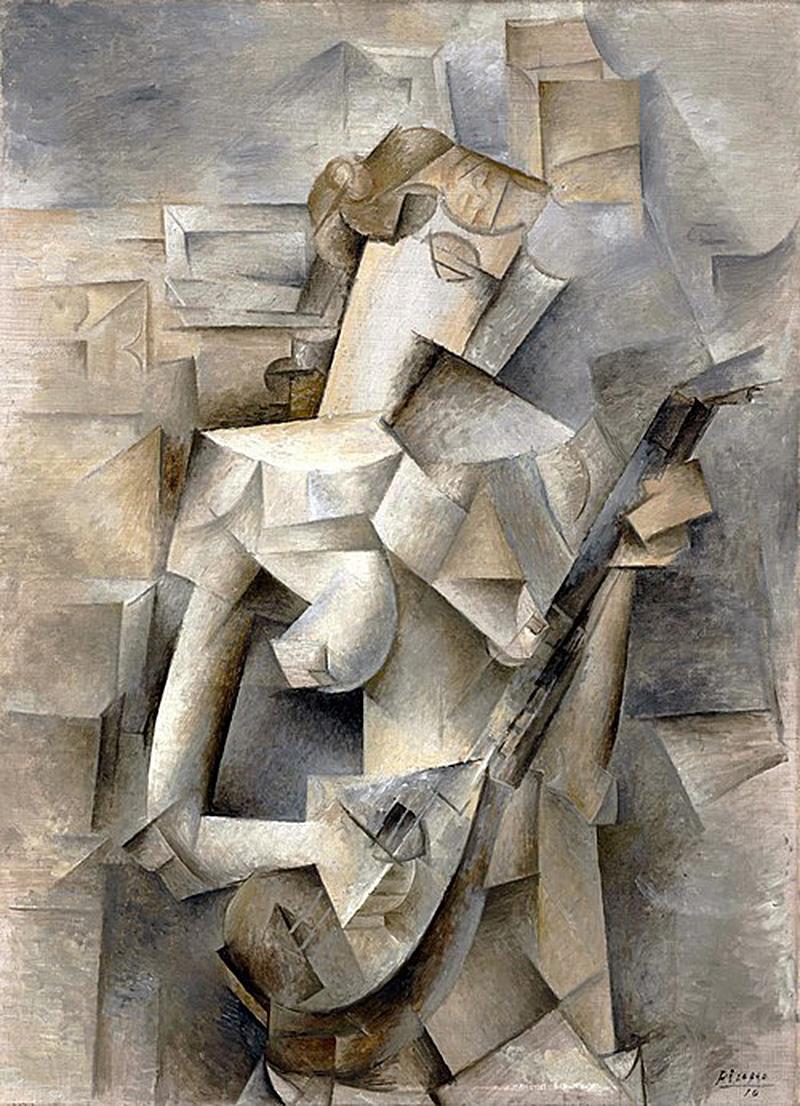
Girl with a Mandolin, 1910. Pablo Picasso. Photo: Wikimedia
It is 50 years since the death of Pablo Picasso, one of the most influential artists of the 20th century. Events are taking place around the world to mark this anniversary, including at the Brooklyn Museum in New York City.
Picasso the Artist
Pablo Picasso was a cofounder of Cubism, the visual style and movement that rejected traditional notions of perspective and the insistence that art should imitate nature. Cubist works conveyed multiple perspectives at once, leading to radically fragmented objects. Picasso popularized African art and incorporated elements of this art (recognizing there was nothing “primitive” about it) into his work. Cubism was a response to big changes in the world and developed alongside of other movements in the visual arts among radical and revolutionary artists. In 1937, Picasso produced one of the greatest cries of artistic protest: the painting Guernica, a response to the Nazi and Italian fascist bombing of a village in northern Spain in 1937.
Picasso’s name is synonymous with “modernism”—with radical innovation, rule-breaking, and breathtaking creativity. His impact has been enormous, not just in painting but in the arts overall.
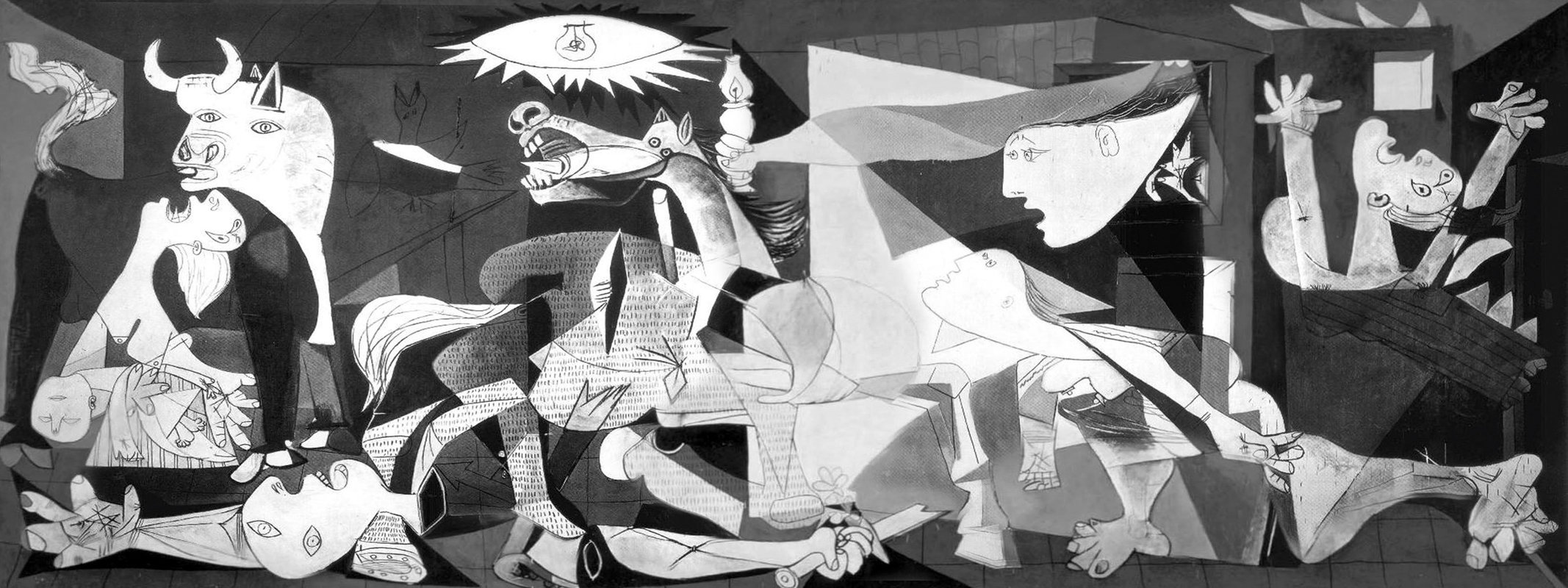
Guernica, 1937. Pablo Picasso
Click image to enlarge
At the same time, Picasso is a complex and contradictory figure, including in relation to his personal life and attitudes toward women. Some have asserted that this side of Picasso’s life was reflected in, or even ran through or determined, his work. The question is whether one should view the artist and the art independently of one another (even as you might evaluate their interrelation); or, whether the artist’s personal life overshadows and inevitably determines the content of the art.
Picasso Exhibit at Brooklyn Museum and the Revolution Books Outing
The Brooklyn Museum has put together an exhibition (through September 24) made up of 50 works by Picasso and 49 works by feminist artists. It is called Pablomatic, and has been curated by feminist comedian and art writer Hannah Gadsby. It is a savage takedown of Picasso.
Given the controversy and debate surrounding Pablomatic—and the large turnouts—and that this is happening as the revcoms are taking on “‘woke’ lunacy vs. real revolution” in the political and cultural realms, Revolution Books decided to organize an outing to the museum.
We set a date and sent out an email about the exhibit. We included some readings and links: what the show’s organizers say; a selection of commentary from artists, art critics, and others in the art world; and a video excerpt from the Bob Avakian Interviews in which Bob Avakian (BA) talks about why it’s dangerous to lead a revolution if you don’t have a poetic spirit. There, he digs into the human need “to be amazed,” why the new communism sees beauty as so essential to the revolution we’re about, discusses his deep appreciation for Shakespeare... and much more.
Bob Avakian on Real Revolution, Its Potential Today, and on the Importance of a “Poetic Spirit”, from The Bob Avakian Interviews
A diverse group came out for this collective viewing and discussion. Among them was a retired teacher, an artist, an international person who works at an NGO, a young teacher, a Columbia University student, and some people from Revolution Books. Raymond Lotta acted as the host. We said, “Let’s see for ourselves, then talk.” So people took in the exhibit in their own ways and pace. There are the paintings; and there is written, audio, and video commentary from Gadsby.
And there’s a big tip-off from Hannah Gadsby about her approach to Picasso, indeed her introduction, just as you enter the exhibit. She says in a message on the wall: “You can have all the perspectives at once... what a hero. But are any of these perspectives a woman’s? Well, then, I’m not interested” (and by implication, neither should you be). Much of her wall texts are mocking and dismissive of Picasso. Of Guernica, the painting about the fascist destruction of the Spanish village, she dismisses it as overblown in importance and tells people: “I would recommend reading Anne Frank’s diary.”
It must also be said (and a number of commentators have pointed out) that the Brooklyn Museum’s selection of work is not the best of Picasso’s work, with the selection revealing a search for those works that support Hannah Gadsby’s thematic. And much of the art on display are works that foreground sexual imagery, some of which, it could be argued, are demeaning to women.
There is a complex but useful word to describe what Hannah Gadsby is doing. The word is “tendentious”: a one-sided and highly biased presentation to press her “woke” anti-Picasso agenda.
Some Highlights of Our Discussion and Reflections
After we got through the exhibit, we gathered in the museum garden for discussion. A number of people told of their first encounters with Picasso’s work and more recent viewings—and how his paintings affected them. Some had seen reproductions of Guernica.
One person said she didn’t think Gadsby was dismissive of Picasso. In her view, the exhibition was designed to provoke people and get us thinking critically... and our very discussion was proof of that. So this led into discussion about whether there really was a “woke” dismissal in play. How was she framing discussion of Picasso’s work, what do people make of her commentary?
As for the controversy regarding Picasso’s personal life, we talked about how a number of art historians writing on Picasso and this exhibit have pointed out, in their own ways, that while Picasso’s biography and personal life matter... that’s not all that matters, and does not determine the value and import of his work. Here Bob Avakian’s approach in his writings on “wokeness” and its venomous “cancel” culture is essential: in evaluating the life and work of an individual, one has to examine its overall arc and thrust—and assess what is principal and most defining, as opposed to cherry-picking things to discredit people.
And must it really be a zero-sum situation, as Gadsby argues: either Picasso or art from women, people of color, and others whose work is not promoted in art institutions? Or can we bring forward under-represented art and artists and at the same time appreciate and learn from a Picasso—and criticize or debate Picasso where that is important and valid?
Several in our visiting group observed that quite a few of the featured feminist artists actually see Picasso’s impact and legacy very differently than Gadsby. A few examples of such artists: Cecily Brown—“Picasso invents and invents and invents.” Joan Semmel—“I have always loved his work and marveled at the ground it has broken, opening new doors into seeing.” The noted African-American artist Faith Ringgold has spoken of Picasso as “the most important” influence on her work.
A number of people asked: why is Hannah Gadsby so single-minded in focusing on Picasso, beyond the obvious 50th anniversary of his death? We dug into this. In reading background material and looking at Gadsby’s commentary and videos, you can begin to see that Gadsby is using Picasso as the emblem of the “genius” (white male “genius”) celebrated in institutions and broader culture. She sees the recognition and celebration of such “great” individuals as intrinsically oppressive. So we dug into this too.
Aren’t we fighting for a world in which everyone can enjoy, learn from and be enriched by those who do make truly great achievements in any given field and draw on that to make contributions of their own in a society rich with ferment, exploration and experimentation and in which all barriers to human creativity are being broken down?
People said they really enjoyed viewing and discussing this show together... and where we went. Revolution Books has to do more of this kind of thing! Be creative and venture into different arenas in opening up the debate about “woke” lunacy versus real revolution—struggling with people to understand the different forms of expression it takes... and the revolutionary response. If you're in NYC, see the exhibit and come by Revolution Books to continue the discussion.
437 Malcolm X Blvd/Lenox Ave (at 132nd St.)
(take the 2 or 3 train to 135th Street and walk 3 short blocks south)
212-691-3345 • revbooksnyc@yahoo.com
www.revolutionbooksnyc.org