It was one of the coldest days of this winter, but some two dozen people braved the elements to come hear Carl Dix at Revolution Books in Harlem, New York City. Carl was giving a talk on why “defunding” the police and “abolishing” the prisons are dangerous illusions—especially at this rare time when a real revolution to overthrow this whole damn system is more possible. It was a mix of people of different ages and backgrounds. Several students came out, including from Columbia University, Parsons School of Design, and the School for Visual Arts, along with activists from RiseUp4AbortionRights and veterans of the battle against police brutality and mass incarceration, as well as people just wanting to get into this topic.
The backdrop, of course, was the heinous killing by police of Tyre Nichols and the perennial trotting out of “new” reformist, dead-end programs and solutions to police terror and murder of Black and Brown youth. We started with an excerpt from the latest RNL—Revolution, Nothing Less!—Show: an illustrated reading of part of Bob Avakian's article “Racial Oppression Can Be Ended, But Not Under THIS System” followed by a moving tribute to Tyre.

Why is Police Terror Necessary For This System?
an illustrated excerpt from "Racial Oppression Can Be Ended—But Not Under This System"
What the System Has Done, and Is Doing, to Black People, and Why Revolution, Not Reform
Carl got into the role that the police play in this society, not to protect people but to enforce the interests of this capitalist-imperialist system. And there is this particular and defining economic situation: as industrial production has been shifted globally by the U.S. imperialists to low-wage locations, increasing numbers of young Black people in the urban centers have become “expendable,” not profitably exploitable in the same way as was the case for much of the 20th century.
The very workings of the system have closed off a real future for large numbers of young Black and Brown men—outside of gangs and the illegal economy, prison, and death at an early age. The police are part of the apparatus of brutal control over people condemned to these conditions. Carl conveyed in deeply felt ways how this system crushes lives and spirits. He also talked about how white supremacy is part of the “ideological glue” of America—essential to holding it together.
Carl walked people through the reformist schemes that have been pushed forward in the wake of past murders: more Black elected officials, more civilian review boards, more body-cams, more Black police. And where they have led: to more of the same and worse. (Last year was a record year for killings by police.) He talked about the absurdity of calling on the system to “abolish” its police, pointing out that it was like demanding that the slave masters abolish their slave patrols... when you still have the system of slavery!
Carl also played an excerpt from the new Bob Avakian (BA) Interviews where BA talks about the lessons of the beautiful uprising following the murder of George Floyd. The revcoms were out there putting forth the need for revolution, but they were not sharply and frontally taking on the reformist programs, like defund the police, that got a lot of traction and contributed to diverting the energy and potential of this uprising.
Carl got into BA's analysis of why this is a “rare time” when revolution becomes more possible—with the ruling class deeply divided and the ruling norms of society under attack by the Republi-fascists—and challenged people to confront the reality, the horrors, of this system and where it is taking us... and to step into this revolution and get into Bob Avakian. (And don't let the “you can't follow a white leader” bullshit ensnare and prevent you from engaging the most important political thinker and leader in the world today!) Carl also referenced how in the new socialist society envisioned by the Constitution for the New Socialist Republic in North America, the police-security forces would function in totally different ways—protecting the rights of the people and serving the people—in contrast to the brutalizing pigs of this system.
Carl issued a strong challenge to everyone to actually step up into this urgently needed revolution, to dig into BA’s interviews, to spread them, raise funds to get them out very broadly in society—and not be afraid to “be the first” to take up this challenge.
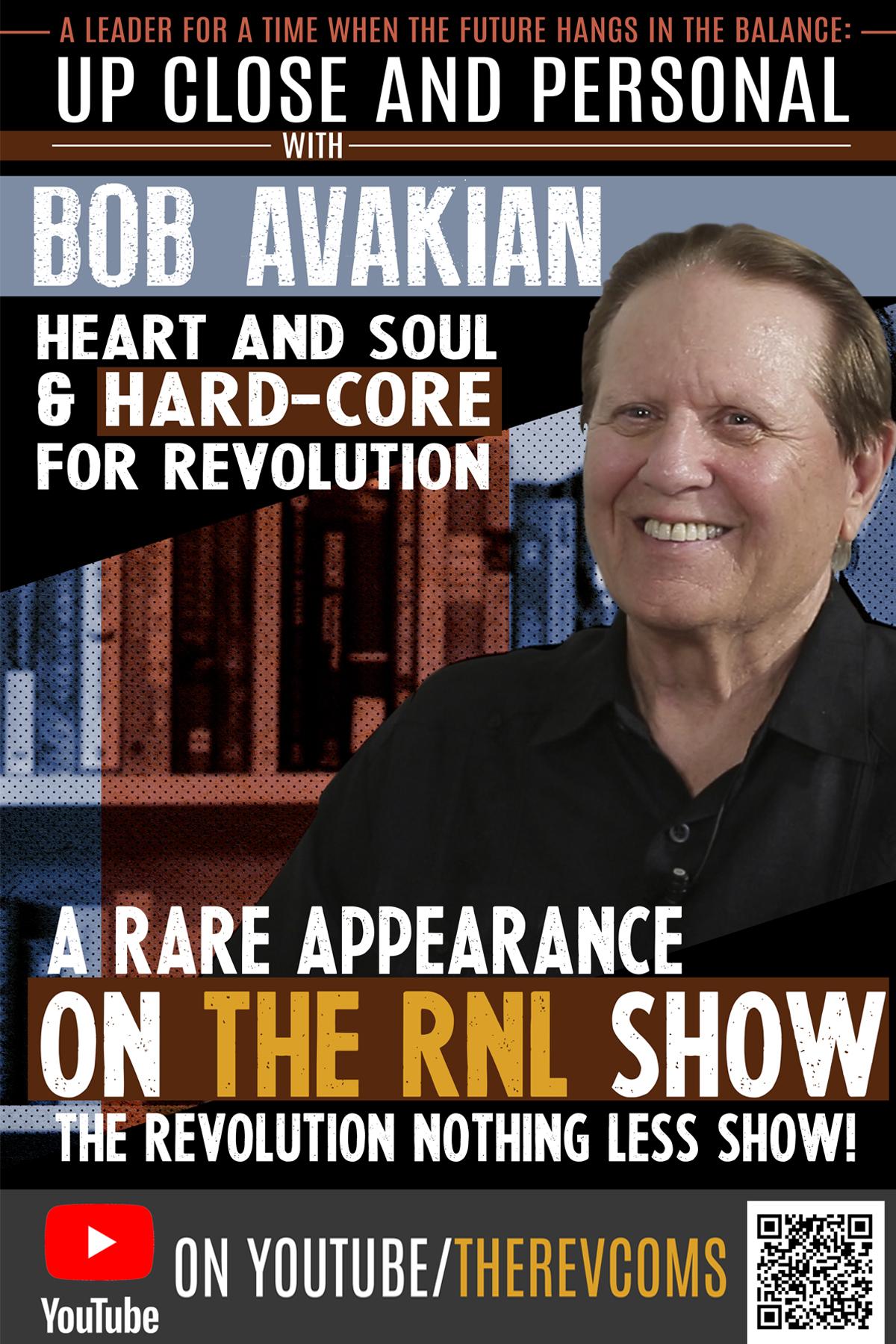
Lively Discussion and Exchange
The audience was definitely stirred and provoked. And there was lively discussion and exchange after Carl's talk. A number of audience members commented on the serious and welcoming atmosphere. People should look at the video of the program on the Revolution Books NYC website once it is posted. But a few highlights...
A student asked about the significance of the “Cop City” struggle in Atlanta, where a new proposed training facility, especially for “crowd control” (located in a forest area surrounding the city) has been opposed by defiant resistance, with the police recently murdering a protester. A health professional posed, how do we organize and motivate people who feel so hopeless, who see revolution as so abstract?
A Stop Mass Incarceration Network activist raised why, after millions were in the streets demanding an end to white supremacy and police brutality in 2020, when it seemed like a “prime time for revolution,” it seemed to fizzle. Carl spoke personally about the mistakes that had been made in approach, in not taking on these reformist lines, as pointed to by BA, doing sharp compare and contrast between programs and outlooks... and how, if we had done this, we could have made much greater advances in preparing the people and accumulating the forces for revolution. In this connection, Carl talked about how not vigorously taking on this line of BIPOC (Black, Indigenous, People of Color) leadership—the idea of just following people because of their nationality or gender, and not really examining the content of leaders' analysis of problem and solution—was another shortcoming.
Another anti-police brutality activist posed: “I support revolution, but until we can do that, shouldn't we be supporting policies like defund the police?” Carl got into how we have to be organizing for revolution now... revolution (getting ready for it) and making revolution IS our strategy. And, again, he spoke to how a wrong approach, on the part of the revolutionaries, of severing resistance from revolution, had hampered our ability to make the necessary advances towards revolution.
Raymond Lotta, who hosted the program, walked people through the fundamental premise—and illusion!—of “abolitionist” programs. This is the notion that if we get the system to redirect resources to alleviate the poverty that leads to crime, get the system to expand social and jobs programs and neighborhood capabilities, then there wouldn't be the same conditions leading people into crime or violent behavior—nor the same need for police and prisons. Raymond, using examples, got into how the system is based on profit and exploitation, that there is a ruling class that controls the resources of society, that this economic system is governed by its priorities and needs, and that this ruling class has a violent hold over society and resources. And look at the state of things today!
We Need More of This at Revolution Books
Just about everyone stayed around after the program for informal discussion, both about the issues raised by Carl's talk and questions they had on their minds. A big one: could a future society actually do better? Someone else posed, why after the end of apartheid in South Africa was there so much talk of “reconciliation,” when there is so much continuing suffering? When asked what she got out of the program, one of the students from Columbia said, “We really need a revolution.”
All of this points to the importance of these kinds of programs at Revolution Books. Especially now, as we work to put real revolution and its leader, Bob Avakian, on the map in 2023.
437 Malcolm X Blvd (at 132nd St) (2/3 train to 135th St)
New York, NY 10037
212-691-3345 | revbooksnyc@yahoo.com | revolutionbooksnyc.org